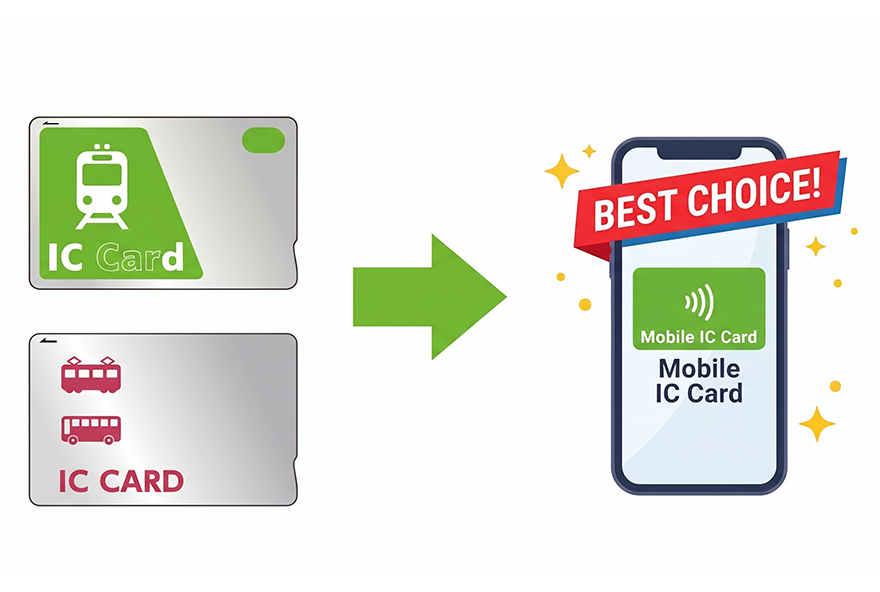
Your smartphone becomes your ticket! How to choose and what to keep in mind about Japan's transportation IC cards.
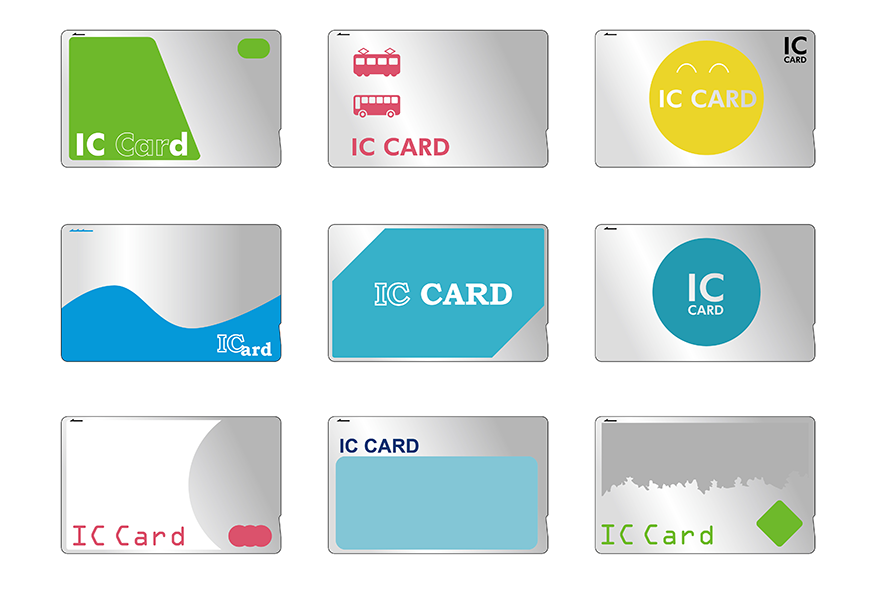
When you arrive at a Japanese train station and look at the ticket counter, aren't you surprised to see signs for various IC cards with different names like "Suica," "PASMO," and "ICOCA"?
"I live in Tokyo, but do I need a different card when I go to Osaka?"
"There are so many kinds, I don't know which one to buy!"
Many people struggle with this problem.
This article explains the complex system of Japan's transportation IC cards and answers the question, "Which one should I choose?"
1. Conclusion: In reality, "it's pretty much the same no matter which one you choose!"
In Japan, there are more than 10 major types of IC cards, depending on the region (such as Suica, PASMO, ICOCA, Kitaca, and nimoca).
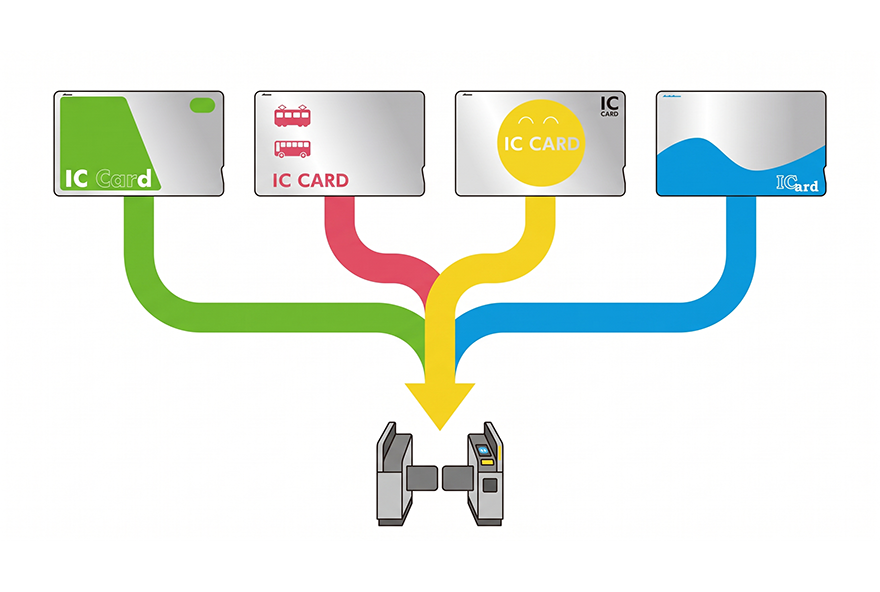
You might be surprised to learn there are so many types! But actually, Japan's major transportation IC cards are connected through a system called "nationwide interoperability."
In other words, you can use a "Suica" card issued in Tokyo to ride trains in Osaka or buses in Hokkaido.
Basically, if you have one card that's easiest to buy in your local area, you can assume you can use it anywhere in Japan.
2. A smartphone (mobile phone) is recommended over a plastic card!
In recent years in Japan, due to a shortage of IC chips (semiconductors) for cards, it has become increasingly difficult to buy plastic cards at train stations.
Therefore, the most recommended options right now are "Mobile Suica," "Mobile PASMO," and "Mobile ICOCA," which turn your smartphone into an IC card.
Easy to top up (deposit money)
You can top up your balance anytime, anywhere using a credit card registered with Apple Pay or Google Pay, without having to queue at a ticket machine at the station.
Just touch your smartphone
You can pass through the ticket gate simply by touching your smartphone to the machine, even without turning on the screen.
No worries even if you lose it
Even if you lose your smartphone, you can transfer your data to a new smartphone.
*The video is in English.
3. Not just for trains! Convenient ways to use "electronic money"
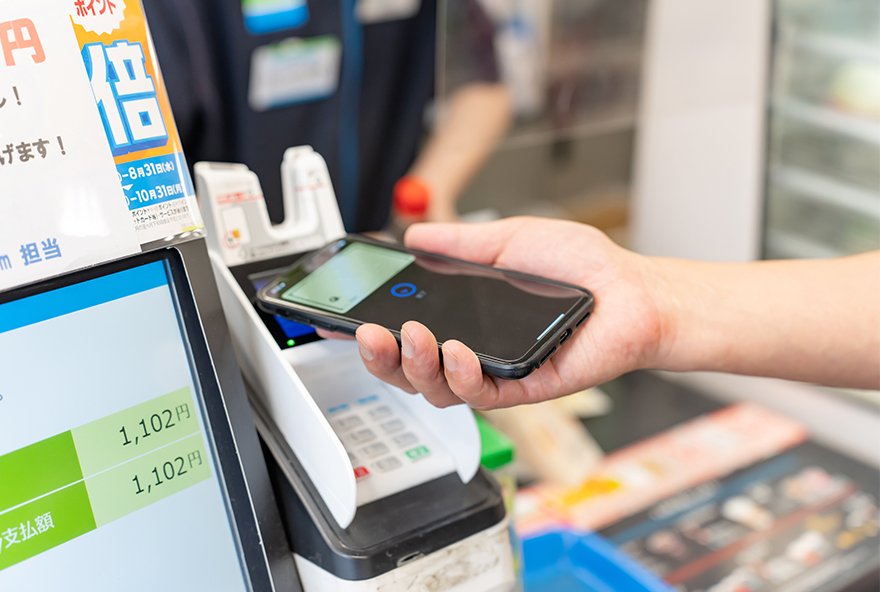
Transportation IC cards are not just tickets for riding trains and buses. It is also a very convenient electronic money (cashless payment) that can be used throughout Japan.
At the following locations, you can make purchases simply by saying "I'll pay with Suica" and touching the terminal.
- Convenience stores (Seven-Eleven, FamilyMart, Lawson, etc.)
- vending machine
- Supermarkets and drugstores
- Restaurants and cafes inside the train station
Since you can live without carrying loose change, life in Japan becomes much more comfortable!
4. Common mistakes! Basic points to note about IC cards
IC cards are very convenient, but there are a few rules in Japan that you should be aware of.
You cannot ride across different areas.
For example, you cannot board a train at a station in the Tokyo area and continue using your IC card all the way to a station in the Nagoya area (you will get an error at the ticket gate). When traveling long distances, you need to buy a paper ticket instead of using an IC card.
You cannot board the Shinkansen directly.
Even if you load a lot of money onto your IC card, you can't pass through the Shinkansen ticket gates with it. To ride the Shinkansen, you will need a special ticket or pre-registration such as "Smart EX".
PiTaPa may not be usable at some convenience stores.
The "PiTaPa" card, which is well-known in the Kansai area, is unique in that while it can be used on trains, it cannot be used for shopping at convenience stores and other places (interoperability of electronic money), so caution is advised.
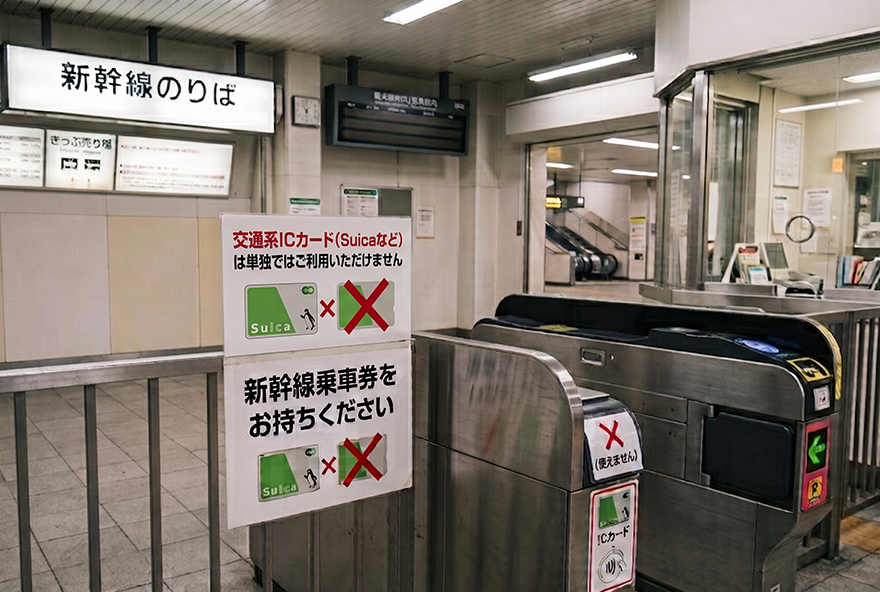
5. Be careful when traveling! Local areas where "Suica cannot be used"
While Suica is often thought to be usable nationwide, there's a catch: it can't be used when traveling to regional tourist destinations.
Buses and trains that only accept the local "unique card"
In some areas, public transportation systems have rules such as, "Only our city's card can be used."
Example: "OKICA," used on Okinawa's Yui Rail (monorail).
Example: Some local bus routes in Hiroshima, Shikoku, and Kyushu. In these areas, touching your Suica card will result in an error.
Areas where IC cards cannot be used (cash only)
When you go to rural areas far from Tokyo or Osaka, you often find that there are no IC card reader machines at the station ticket gates. IC cards cannot be used at most stations in the Shikoku region (Ehime, Kochi, Tokushima prefectures, etc.) or on local lines in Hokkaido and Tohoku. To ride the train, you need to buy an old-fashioned "paper ticket" with cash.
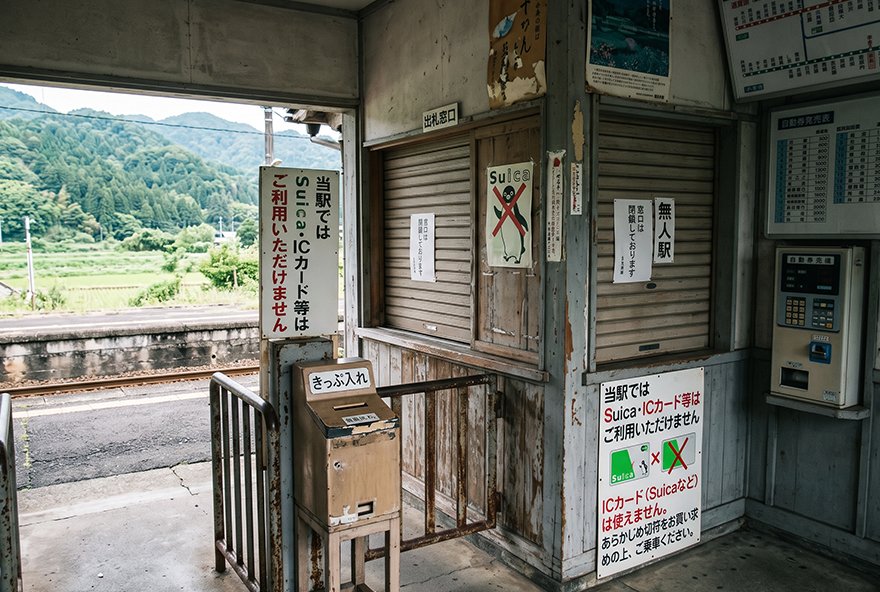
[Summary] First, try installing "Suica" or "ICOCA" on your smartphone.
If you're overwhelmed by the many transportation IC cards available, the best recommendation is to register the most well-known and easy-to-use "Mobile Suica" or "Mobile ICOCA" on your smartphone.
Also, when traveling to rural areas, it's a good idea to carry a little extra cash, just in case your Suica card isn't accepted.
Be sure to set it up and enjoy a smooth trip around Japan!