What is a "Matsuri"? ー Kyoto's Big Summer Event, "Gion Matsuri" ー

You may have heard of “Matsuri” (often also called “Omatsuri”, with the "o" functioning as an honorific), which means to celebrate a deity. It comes from the word "matsuru", which means to worship.
Matsuri are traditional events with a long history and significant place in Japanese culture.
Matsuri often involve Shinto rituals, music, dance, and parades. They are held to express gratitude to the gods, celebrate seasonal events, or commemorate historical events.
However, many attend to enjoy the festivities with no particular participation in the religious aspects - Matsuri often have large rows of Yatai - food booths, games, goldfish scooping, and many other activities.
If you are traveling to Kyoto in the summer, there is a festival we highly recommend - Gion Matsuri. It is one of Japan’s most famous Matsuri with one of the longest histories.
What is Gion Matsuri?
Gion Matsuri is held in Kyoto for a whole month of July, every year. It is the festival of Yasaka shrine, located in Gion.
Infectious diseases used to run rampant in the summer, and the people prayed to their God(s) to stay safe. This was the beginning of Gion Matsuri.
Nowadays, it is the big summer event of Kyoto that people look forward to.
Highlights of Gion Matsuri
• Yamahoko Junkou
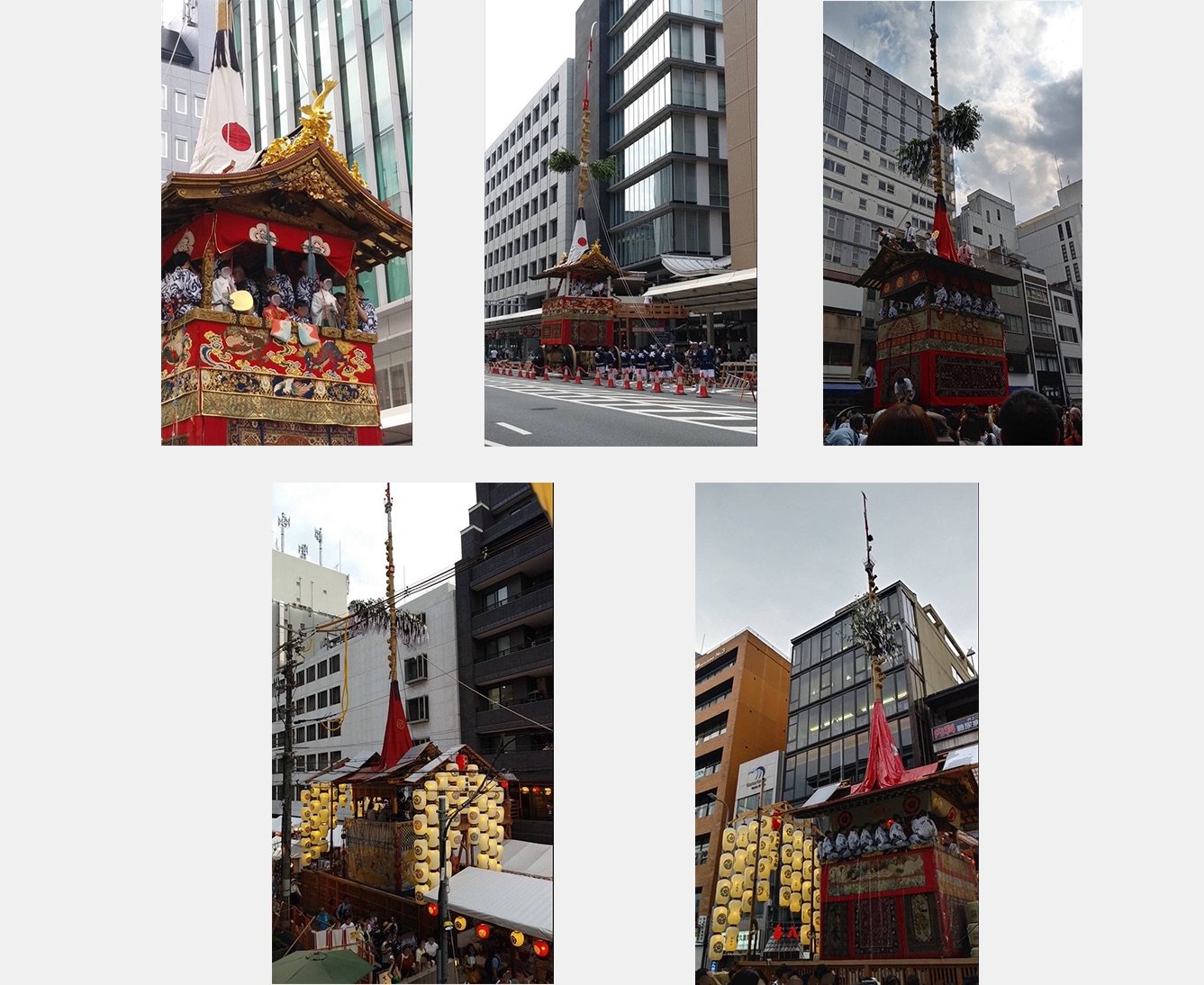
“Yamahoko” is a wheeled structure as large as a house, made bright and flashy with various decorations. “Junkou” means to cruise or patrol, and in this case it refers to the Yamahoko being moved by Matsuri participants.
The Yamahoko parades twice, during the Saki Matsuri (pre-festival) and the Ato Matsuri (post-festival). In the Saki Matsuri, there are 23 Yamahoko, and in the Ato Matsuri, there are 11.
The sight of so many people putting their strength together to pull this structure into the city is something very powerful and inspiring.
• Yoiyama
Walking through Yoiyama
The 3 evenings and their festivities before the Yamahoko junkou are called “Yoiyama”.
The “chouchin”, which refer to paper lamps, placed on the Yamahoko are lit on these nights. The soft lights illuminate the cities, and creates a very fantastical view.
Make the Experience Extra Special!
• Try Wearing a Yukata!
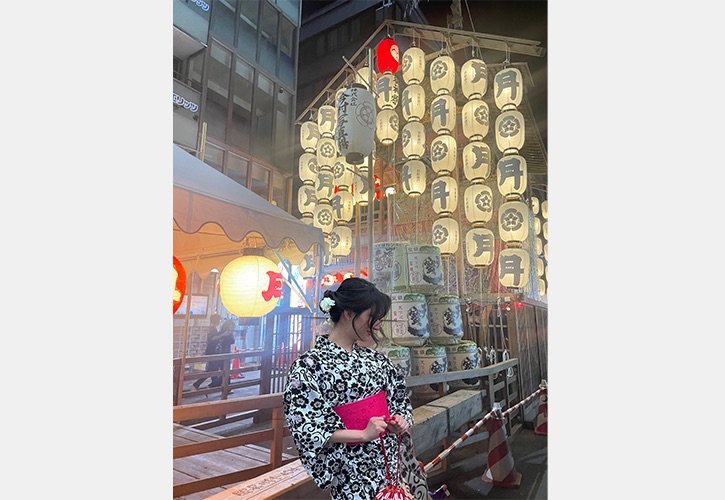
A Yukata is traditional Japanese clothing that is lighter and more relaxed than the formal kimono. Its breathability makes it more suitable to wear in the summer, or even after a dip in the onsen. It is common to dress up in Yukata to attend a Matsuri, though not mandatory. Yukata are often paired with Geta, which are traditional Japanese footwear resembling a sandal. Women usually accessorize with hair decorations when wearing a Yukata.
There are many rental stores where they not only rent out Yukata, but also help you in the process of dressing up. Some places offer hair arrangement services as well.
Dressing up for a matsuri is a recommended experience to up the festive mood!
• Have a Taste of Japan at a Yatai
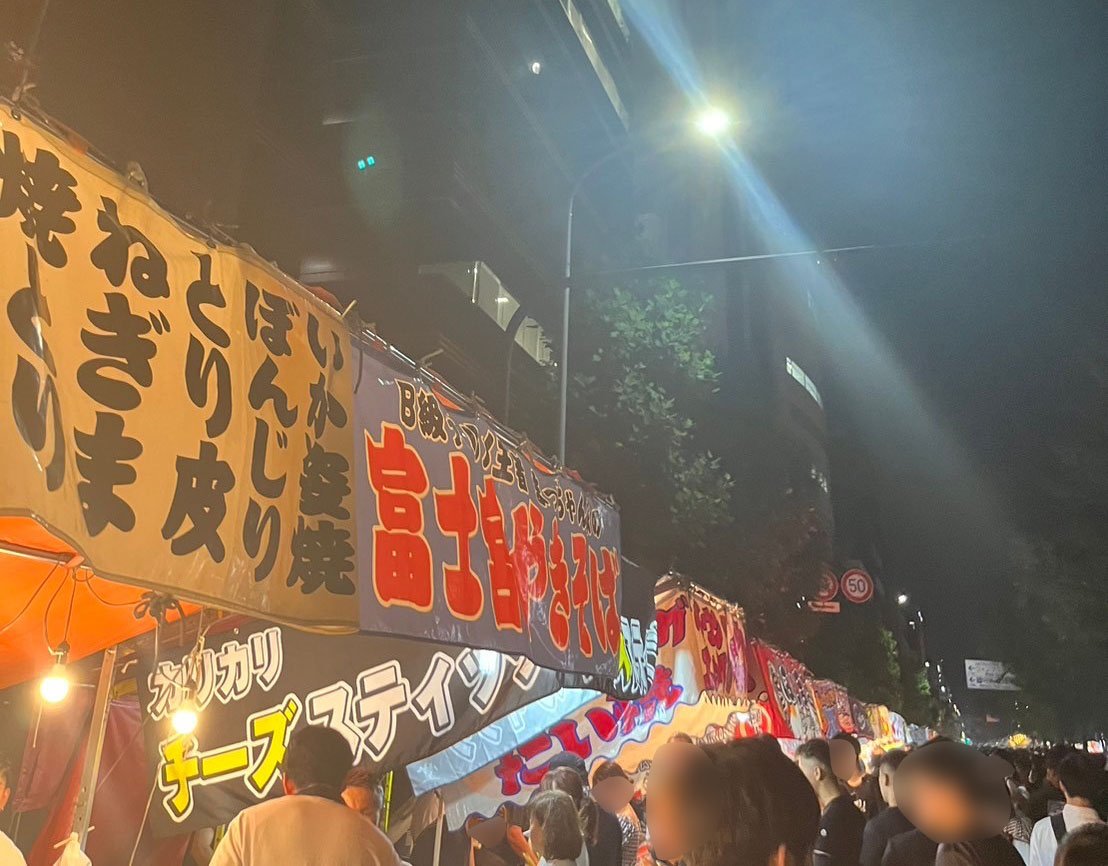
Yatai are small stalls or booths placed along the streets where the Matsuri takes place.
You can enjoy many “Matsuri-staple” foods such as Takoyaki (cooked dough balls with octopus), and Kakigoori (shaved ice with syrup). There are also games and activities available, such as shooting galleries, goldfish scooping, and many more.
• Attend the Byobu Matsuri
Scenery from the Byobu Festival
Byobu Matsuri is also known as the “Folding Screen Festival”. These screens are often embellished with paintings or calligraphy. During the Yoiyama, families that have long resided in Kyoto may showcase their treasured byobu, as well as other family heirlooms.
It is a rare and great opportunity to get in touch with traditional Japanese culture and artistry.
- Eki Jinja Nagoshi Sai
Eki Jinja Nagoshi Sai
On July 31, the final ritual of the Gion Festival, called the Ekijin Nagoshi Sai (Shrine Summer-Passing Festival), takes place. This ceremony is associated with the Chinowa, a large ring made of grass. The Chinowa is traditionally used as a protective charm, believed to help the population avoid epidemics and maintain good health.
Eki Jinja is located inside Yasaka Shrine, and enshrines Somin Shorai, a legendary figure believed to protect people from disease. A large Chinowa, over two meters high, is set up for visitors.
Worshippers pass through the Chinowa, receive a talisman called “Somin Shorai Shisonnari,” which signifies being a descendant of Somin Shorai. They take a small piece of grass home, praying for health and safety.
With this ritual, the Gion Festival, which has continued throughout the entire month, comes to an end.
Advice and Manners:
- There will be many people at Matsuris. Beware of pickpockets, hold on to your bags and purses tightly.
- Please place trash in their designated trash bins, or take them home instead of littering. Let’s help keep the city clean!
- To secure a good spot to watch the Yamahoko junkou, it would be a good idea to arrive early and wait for its arrival.
Gion Matsuri is a special event where you can experience the culture and history of Kyoto.
It is an intriguing experience that we strongly recommend engaging in to immerse further into the Japanese culture.