Guide to Visiting “Otera” (Temples) - Introducing Sensō-ji, Tokyo’s Most Famous Otera -

You may have heard of “Otera” (often shortened to “Tera”), the Japanese word for a Buddhist temple. The “o” is an honorific prefix, just as in Omatsuri, making it a polite way to refer to a temple. The core word ”tera” means “temple”, and originally referred to places for spreading and practicing Buddhist teachings.
Temples remain central to Japanese culture, deeply tied to Buddhism. People visit to express gratitude to the Buddha, pray for happiness and health, and take part in sutra recitations, seasonal events, and memorial rituals.
However, those who are not of Buddhist faith can visit Otera without participating in the religious practices. Non-Buddhist visitors can still appreciate the beauty of its architecture, gardens, and serene atmosphere.
This article introduces Sensō-ji, temple applauded as a “must-visit” spot that is only a short walk from Asakusa Station in Tokyo. Founded in 634, it is rich with history. Its principal deity is Kannon, the Goddess of Mercy, making it an important place for prayers of health and happiness. Today, Sensō-ji is also an extremely popular tourist destination, always lively with visitors from around the world.
Highlights
-
Kaminari Mon
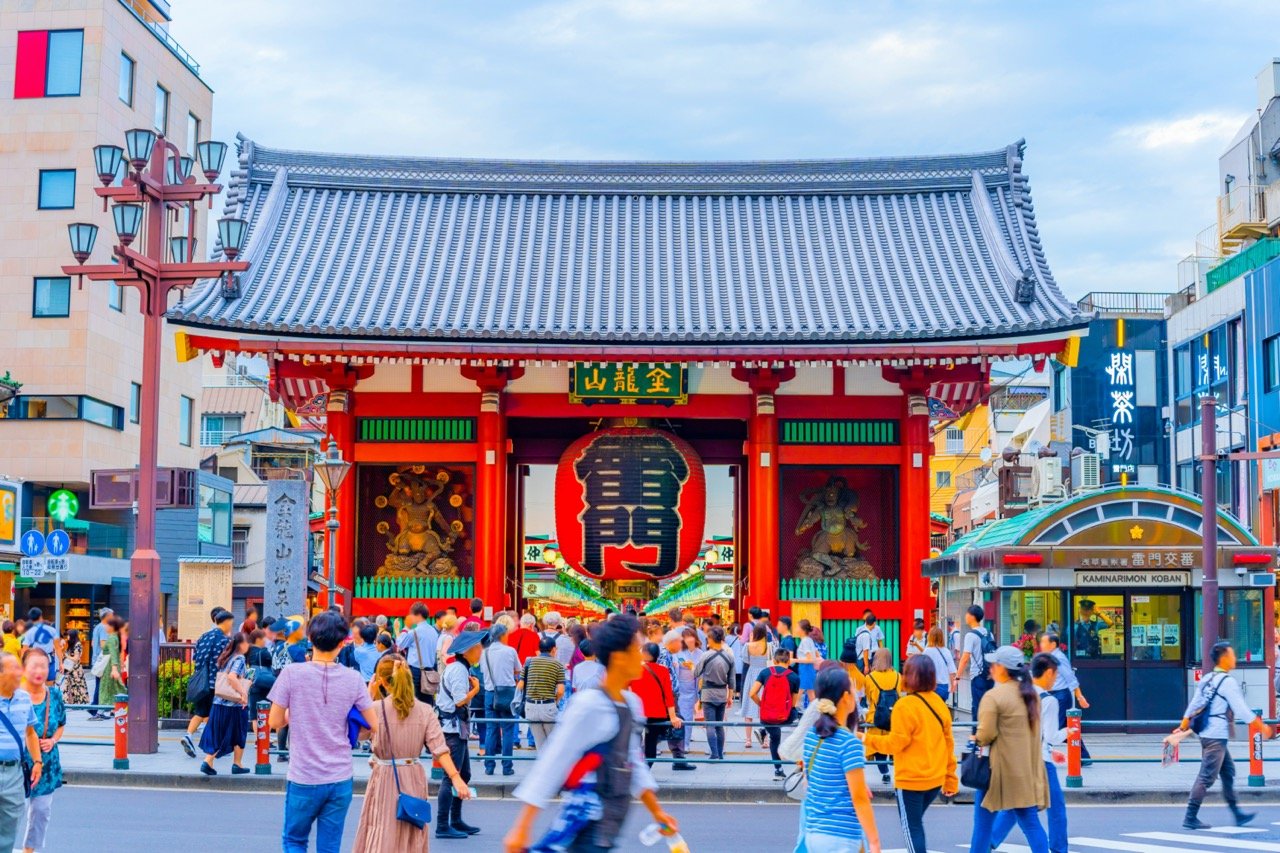
Kaminari Mon literally translated to “Thunder Gate”. This gate is placed at the entrance of Sensō-ji, and the first thing to catch your eye will be the enormous red cho-chin (lantern). Standing approximately 4 meters tall, it is an impressive sight as you pass by beneath. On either side of the gate are statues of “Fūjin” (the wind god) and “Raijin” (the thunder god), both traditional Japanese deities of protection. At night, the lantern is illuminated, offering a completely different view and atmosphere from the daytime.
-
Nakamise Doori
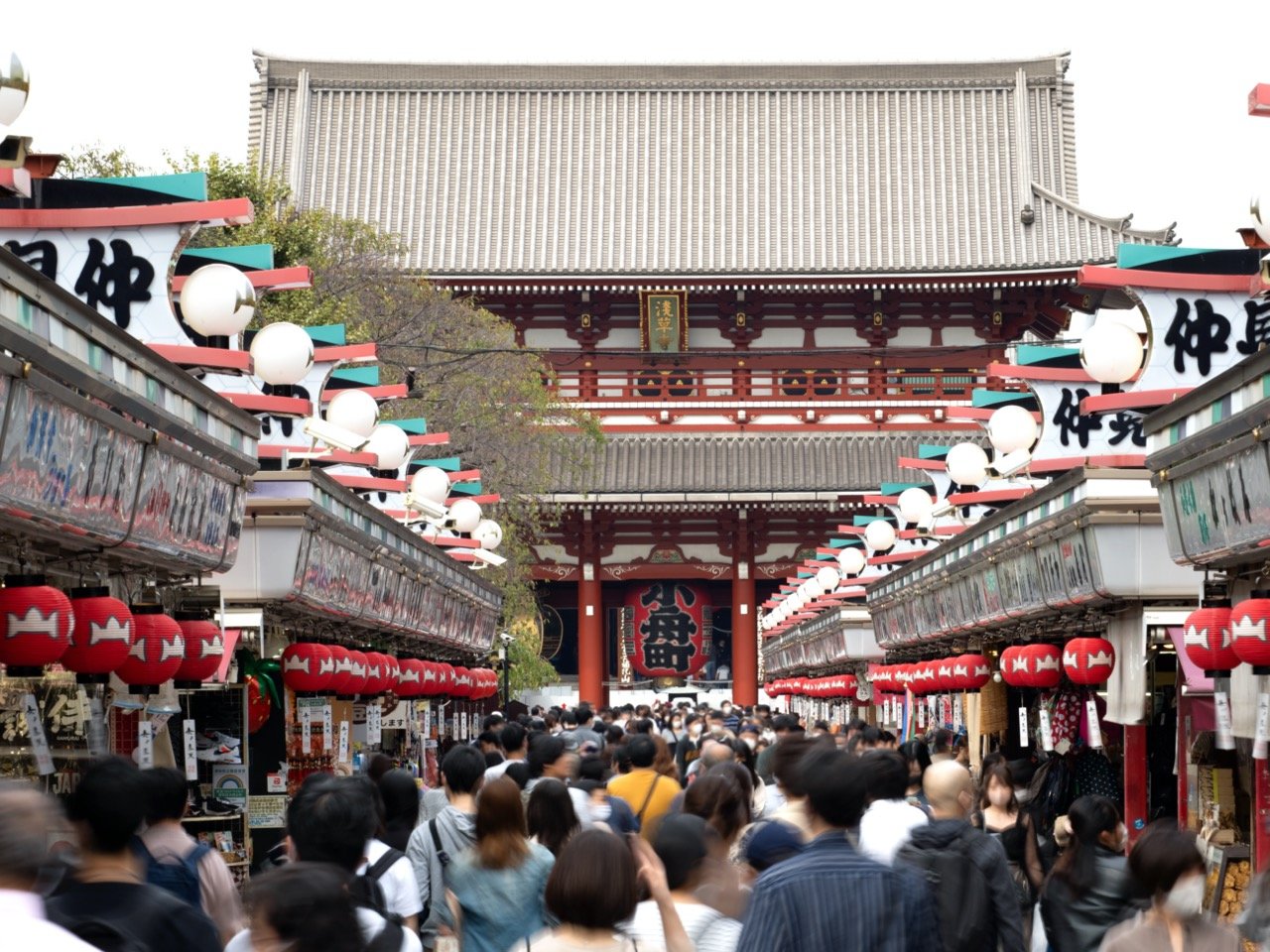
Stretching about 250 meters from the Kaminarimon to the temple’s main hall, Nakamise Doori is said to be Japan’s oldest shopping street. Over 90 shops line the way, offering everything from classic treats like “ningyō-yaki” (sweet bean-filled cakes) and “kaminari-okoshi” (sweet crispy rice snacks) to kimono-inspired goods and traditional Japanese crafts and knick knacks. It’s the perfect place to grab a souvenir, take a leisurely stroll with a snack in hand, and soak up the lively vibe on your way to Sensō-ji.
-
Goju no Tou
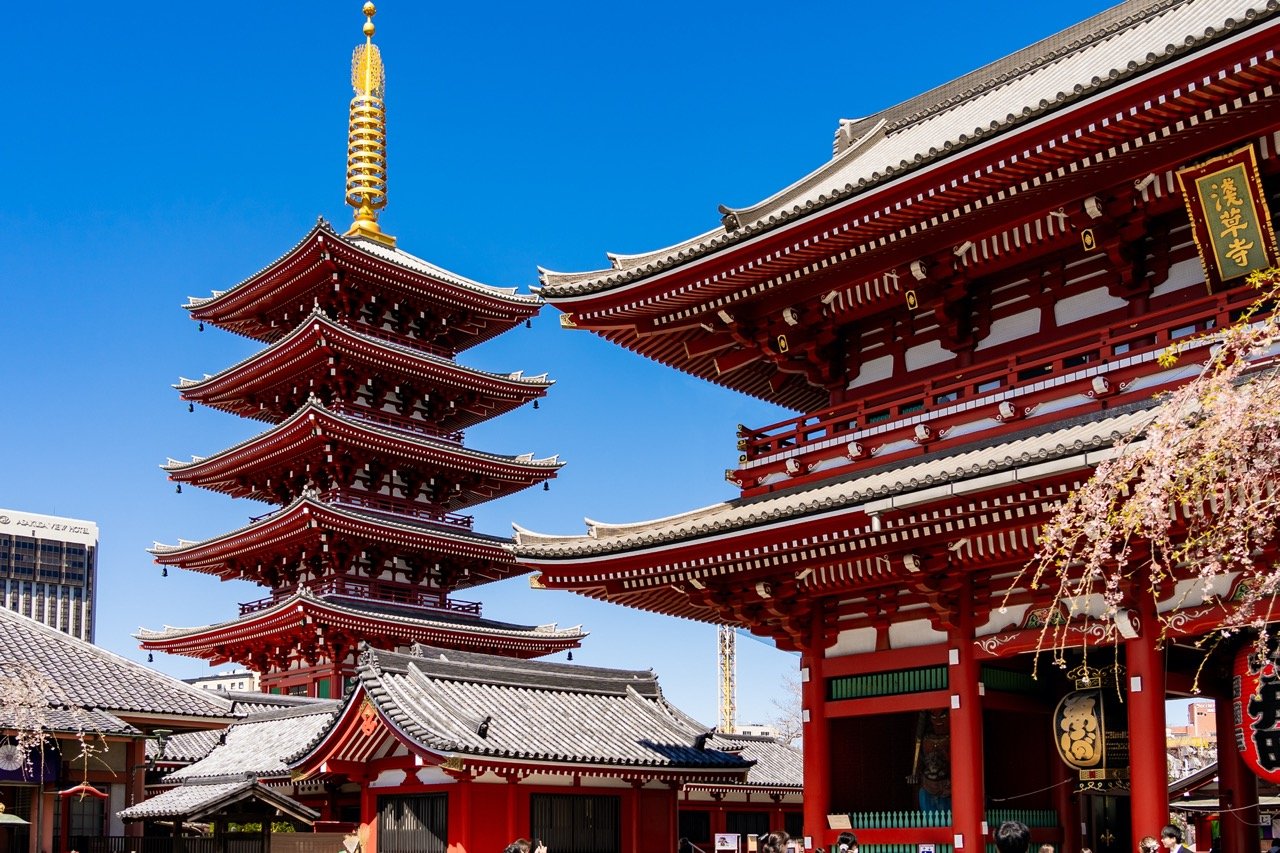
Standing at about 48 meters tall beside the Hondou (the main hall), this stunning five-story pagoda is one of Sensō-ji’s many photogenic spots. Its striking red pillars and gracefully curved rooftops make it an ideal backdrop for anyone wanting to capture a quintessentially Japanese scenery.
-
Hondou
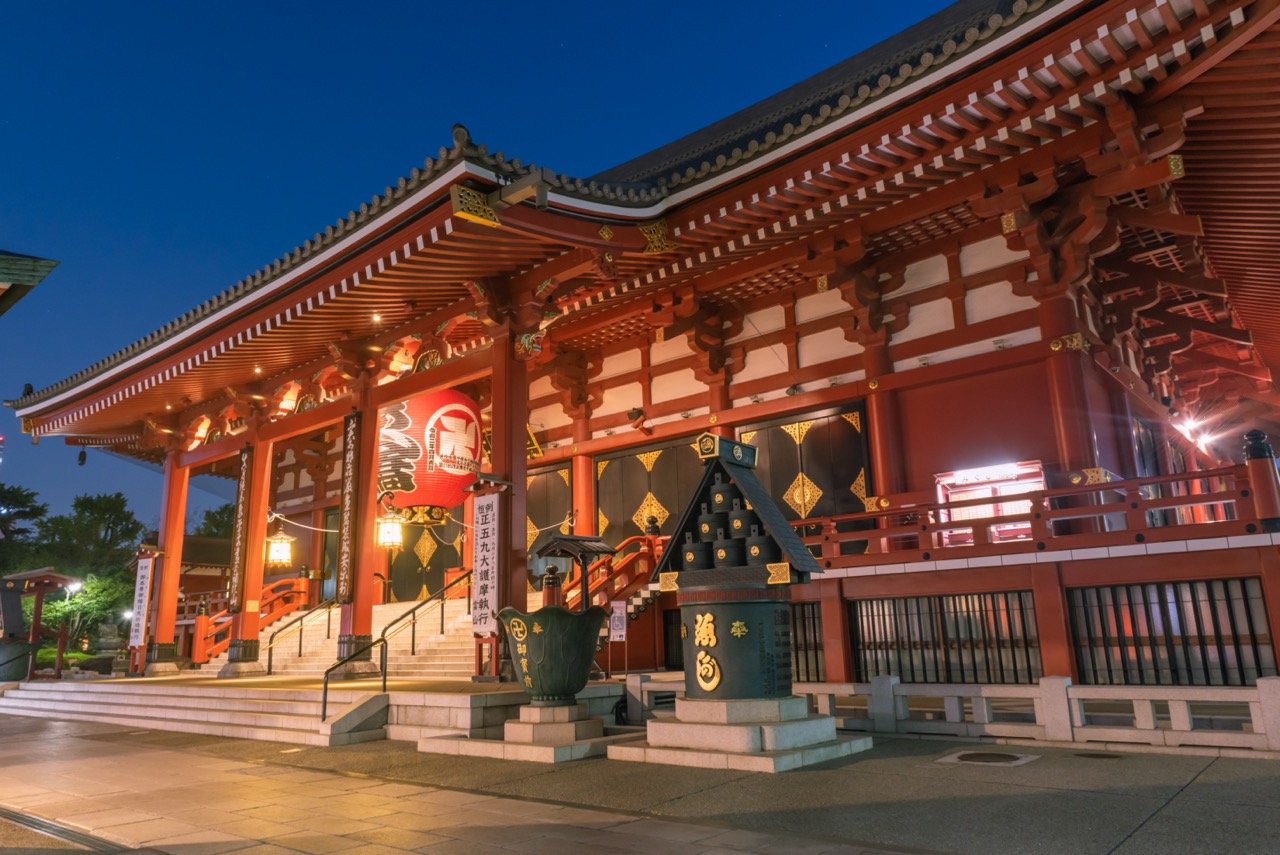
At the heart of Sensō-ji is the Hondou (Main Hall), where the statue of Kannon is enshrined. This is where countless visitors come to offer prayers. Right outside the entrance is a large incense burner - it is said that wafting the smoke over any aching part of your body can help heal it. Don’t be shy to give it a try!
For a bit of fun, you can also draw an “omikuji”, a fortune slip. English versions are also available for international visitors.
-
Houzou Mon
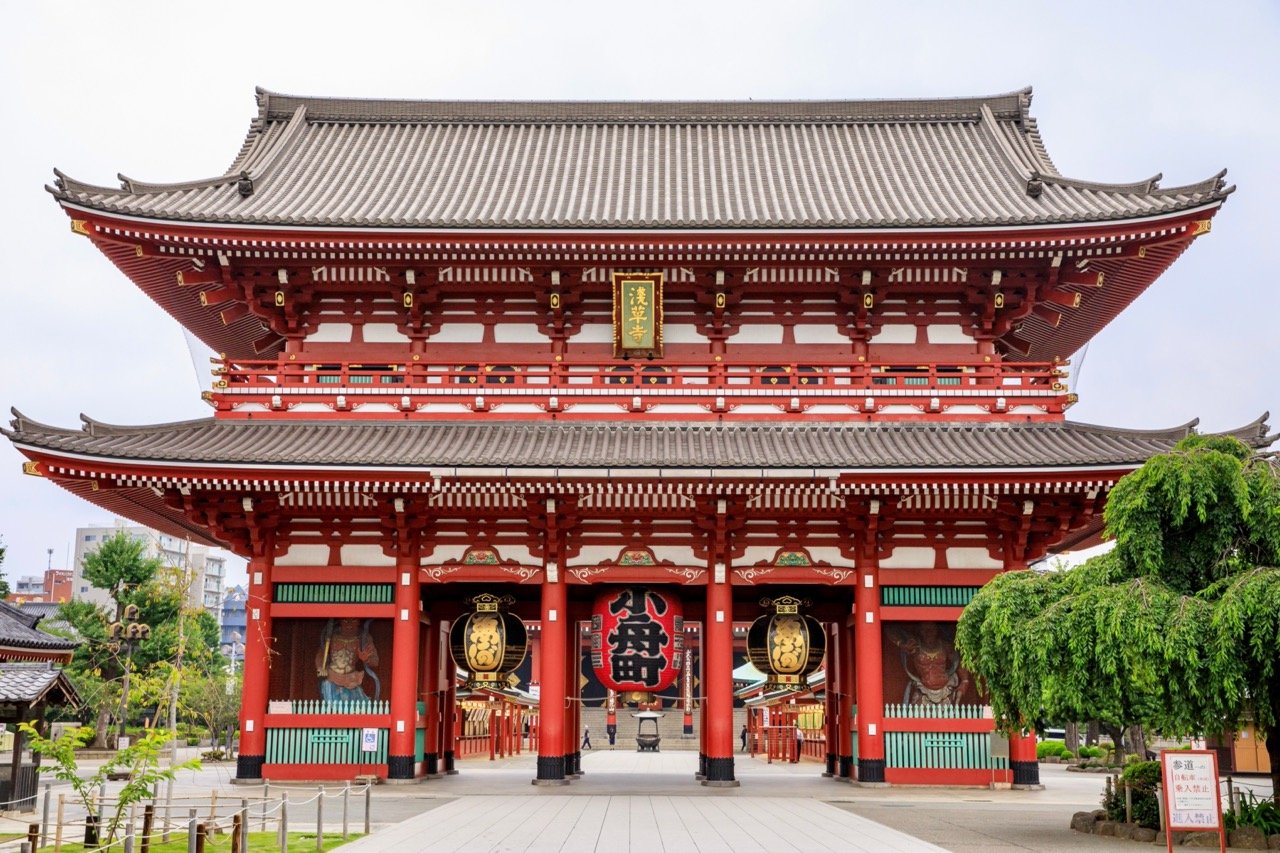
Between the Kaminari Mon and the Hondou is the Houzoumon. One of its most memorable features is the massive “waraji” (traditional straw sandal) hanging above. It is said to ward off evil spirits.
Steps of Worship
1. Wash Your Hands and Rinse Your Mouth
A How-To Guide on Temizu
Before praying, visitors cleanse their hands and rinse their mouths at the Temizuya / Chouzuya (water pavilion). This ritual is meant to purify the spirit and prepare you for worship. For a step-by-step demonstration with visuals, check out the video above!
2. Osaisen (Offering Coins)
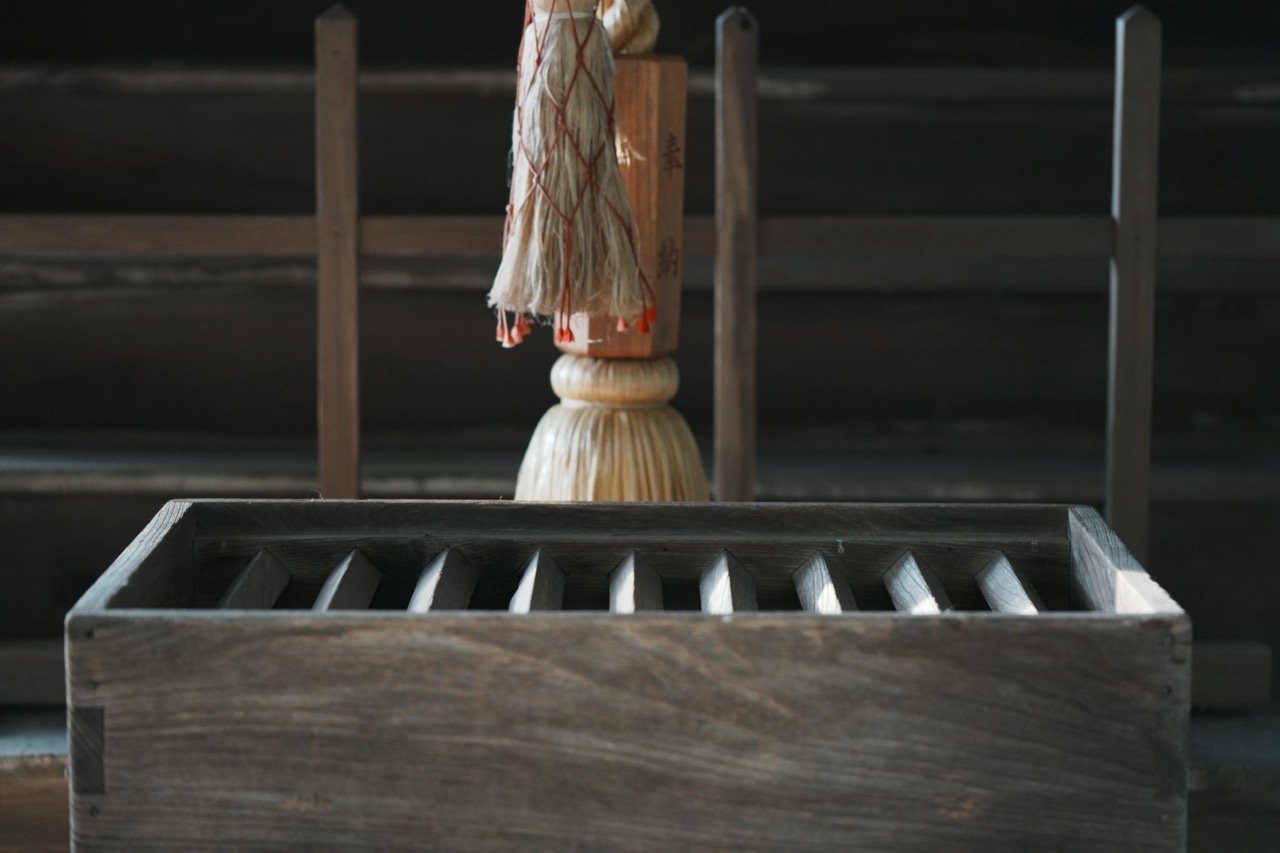
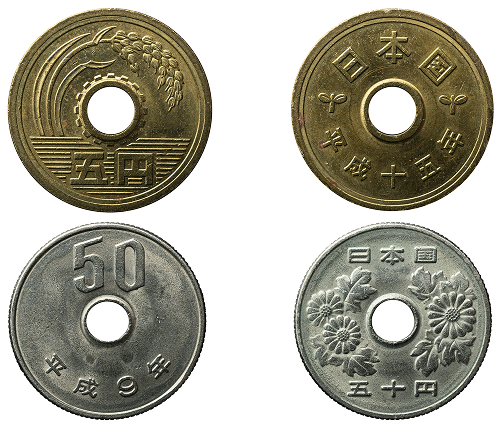
There is no set amount for what you should offer at the Osaisen box - it’s your intention that matters most. Some people like to give 5 yen, playing on the word “go-en”. With “en” being the Japanese pronunciation of “yen”, and the word for “good fortune” or “connection” (with an honorific of “go” at the beginning), while others choose 50 yen to symbolize “clear vision” for the future, as the 50 yen coin has a hole to see through it.
3. Bow Twice → Clap Your Hands Twice → Bow Once
The etiquette of “Nihai nihakushu ippai”
The standard way to pray at a temple is called “Nihai nihakushu ippai”; two bows, two claps, and one final bow. Bowing shows respect to the deities, while clapping is said to invite the gods and fight off evil spirits. There are more detailed rules and variations, so feel free to ask at the temple or do a bit of research if you want to learn more.
Perfect Combination for Your Trip to Sensō-ji!
Tokyo Skytree
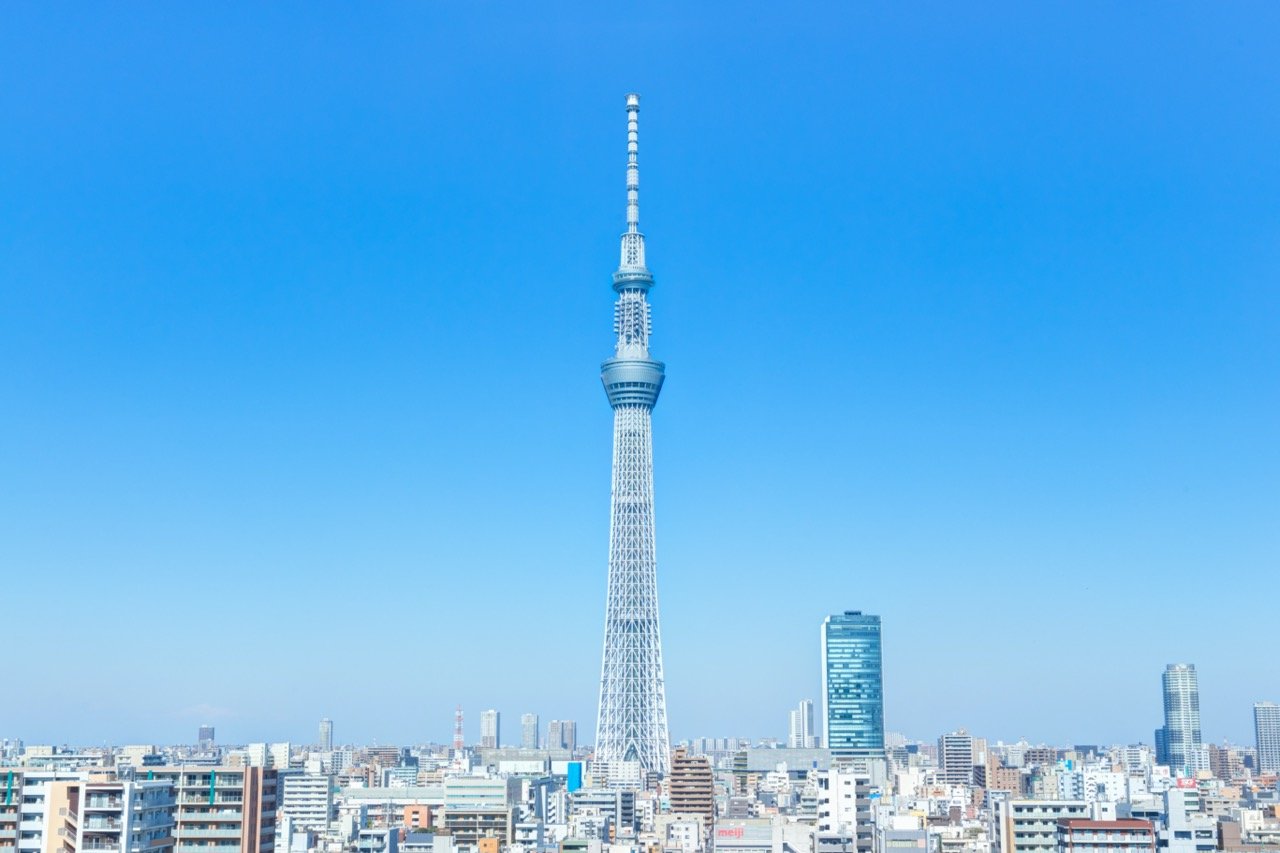
Within walking distance from Sensō-ji is the famous Tokyo Skytree, one of the tallest towers in the world. From its observation decks, you can enjoy panoramic views of the city. The tower is beautifully illuminated at night as well, making for a whole different majestic view.
There are occasional periods when the Skytree holds special collaboration events with popular anime, so if you’re a fan, planning your visit to coincide with an anime you enjoy, can make for an extra-special experience.
Sumida Aquarium
Introduction to Sumida Aquarium
The Sumida Aquarium is located at the base of Tokyo Skytree, and is a popular spot featuring adorable penguins and mesmerizing jellyfish displays. It’s a relaxing, soothing space that’s perfect for a peaceful break during your sightseeing.
Wagashi Zukuri (Japanese Sweets Making) Experience
An example video of a Japanese sweets making experience
You can find various hands-on experience facilities to make traditional Japanese sweets yourself. It’s a fun and memorable activity that can commemorate your trip - and the treats are perfect for souvenirs too!
Manners and Precautions to be Aware of at Sensō-ji
-
Please refrain from shouting or making loud noises in the Hondou and other sacred spaces.
-
Photography is allowed, but please avoid flash or entering/photographing restricted areas.
-
When offering osaisen (coins), place them gently instead of throwing them in.
-
When enjoying street food, it is best to eat near the shop where you bought it (especially if sitting down, it is most well-mannered to sit in the designated spaces of a store you bought from).
-
Be mindful of pickpockets, as the area can get crowded. Carry your bag on your front side, for extra safety.
-
Keep an eye on your belongings in the crowds - wallets, phones, and other items can easily be dropped or misplaced.
In Summary
Sensō-ji is a must-visit destination in Tokyo; you can further your knowledge in history while also enjoying sightseeing and tasting delicious local foods. From the awe-striking Kaminari Mon to the majestic atmosphere of the Hondo, and the liveliness of Nakamise Doori - a visit here offers a true immersion in Japan. Be sure to consider adding it to your itinerary!