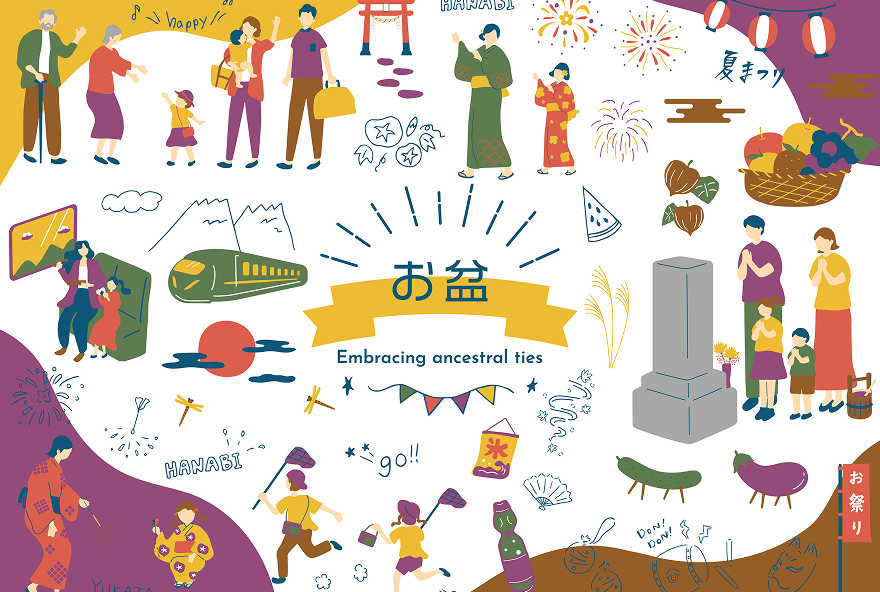
Awa Odori ~ A Tokushima Matsuri ~

Awa Odori is one of Japan’s largest dance matsuri, held in Tokushima Prefecture. Outside its home in Tokushima, it also takes place in Koenji (Tokyo) and Minami-Koshigaya (Saitama Prefecture).
The Tokushima City Awa Odori, is held every year from August 12th to 15th, and has a history of over 400 years. Numerous dance units called “Ren” perform in their own unique styles.
There is a famous saying that goes:
“The dancing fools and the watching fools - if both are fools, you might as well dance!”
Just as the saying suggests, Awa Odori is not only for watching. Anyone can join in and dance, which is one of its greatest charms.
Awa Odori Vocabulary!
To help you understand and enjoy Awa Odori even more, here are some basic terminology used for this matsuri.
★Ren
A “Ren” is a team or group that dances in Awa Odori. There are many kinds, be it long-established and famous Rens, coporate-sponsored Rens, student Rens, and more - totaling over a thousand groups.
★Zomeki
"Zomeki" refers to the distinctive two-beat rhythm unique to Awa Odori that creates a cheerful and lively atmosphere. The word originally meant “noisy” or “boisterous,” and it captures the joyous energy of the dancers.
★Yoshikono
"Yoshikono" is the name of the song sung during Awa Odori. Its origin is unclear, but it is said to be a folk song that became popular in the late Edo period and was brought to Tokushima by indigo merchants traveling from Kyoto and Osaka.
★Seichou
"Seichou" means “the correct, traditional way of singing or playing.”
In Awa Odori, it can also refer to an orthodox or authentic style of performance.
★ Nagashi
"Nagashi" refers to walking through the streets during the daytime, playing shamisen and other instruments without dancing. It is a traditional performance style focusing on the art of music.
★Yattosaa
This is a call-and-response shout used at the start or during the dance.
When someone calls “Yattosaa”, others reply “Ah, yatto yatto!”.
It carries a warm, friendly feeling, as if saying to an old friend,
“Long time no see! How have you been?”
★Narimono
A ”Narimono” is a collective term for the musical instruments that support the Awa Odori performance. This includes shamisen, oodaiko and shimedaiko (large and small drums respectively), kane (bells and gongs), fue (whisltes/flutes), and tsuzumi (hand drums).
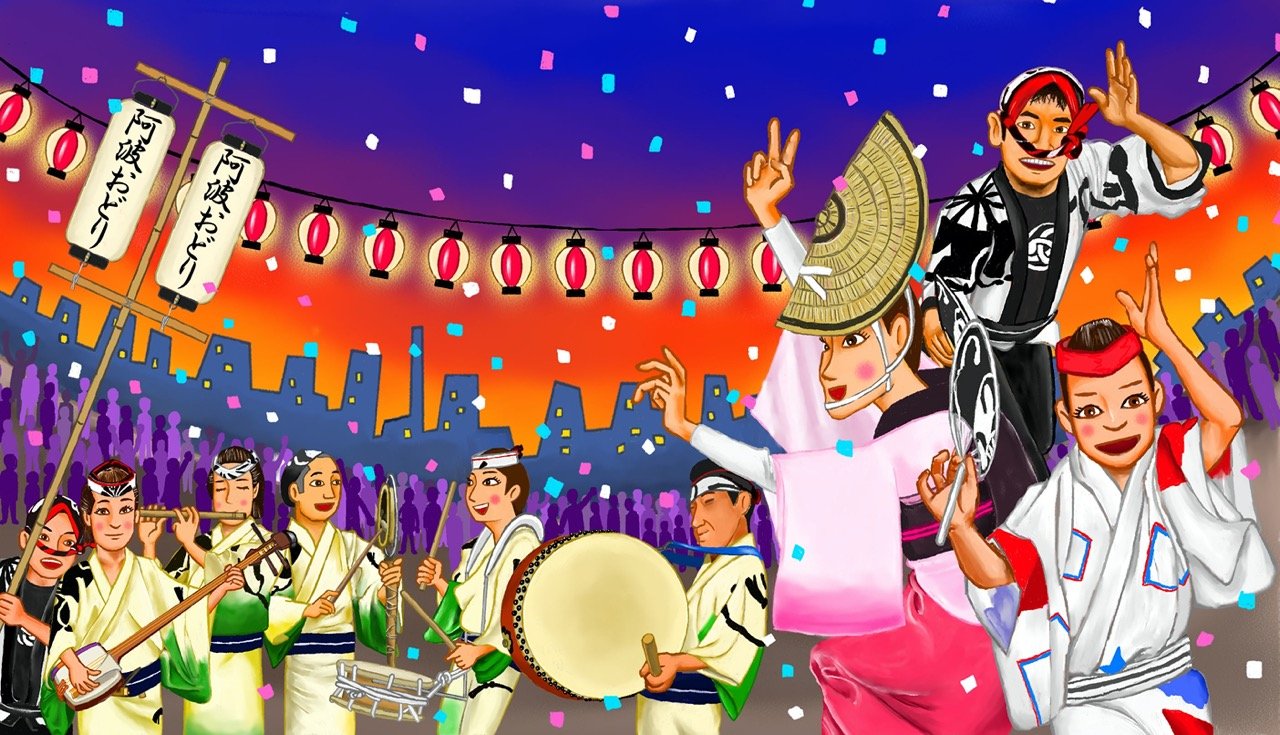
★Takahari Chouchin
This refers to the person who carry the tall lanterns carried on long bamboo poles at the front of each Ren, bearing the Ren’s name. The carriers play an important role in setting the group’s moving pace, and is required to have physical stamina to uphold the swaying lanterns in the wind.
The Beginning of Awa Odori
Awa Odori has a history of about 400 years and is now known around the world as one of Japan’s representative traditional performing arts. There are several theories as to how it started.
1. Castle Construction Origin Theory

One theory states that in 1587 (Tenshō 15), when Hachisuka Iemasa finished building Tokushima Castle, the townspeople celebrated its completion by dancing, and that this marked the beginning of Awa Odori.
2. Fūryū Odori Origin Theory
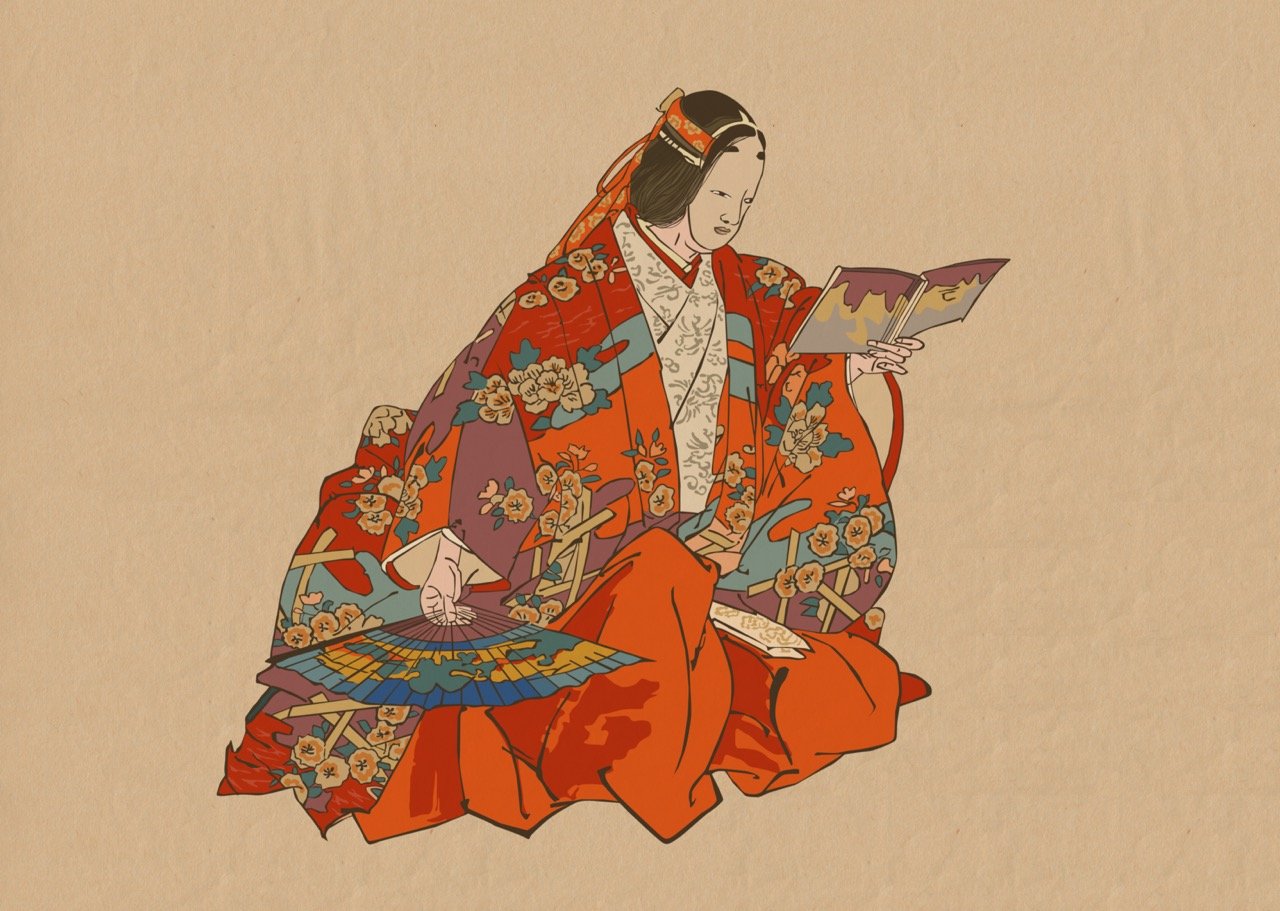
Another theory traces its roots to Fūryū, an early form of Japanese traditional entertainment that later influenced Noh Gaku (theater), a form of classical performing arts featuring slow, mindful movements and “Omen”, which is a type of mask worn on the face. Fūryū refers to elegant and refined performances or amusements, including dances and costumed parades held during matsuri. It is said that the “Fūryū Odori (dance)” performed by Sogō Masayasu at Shōzui Castle in 1578 (Tenshō 6) was the prototype for Awa Odori.
3. Bon Odori Origin Theory
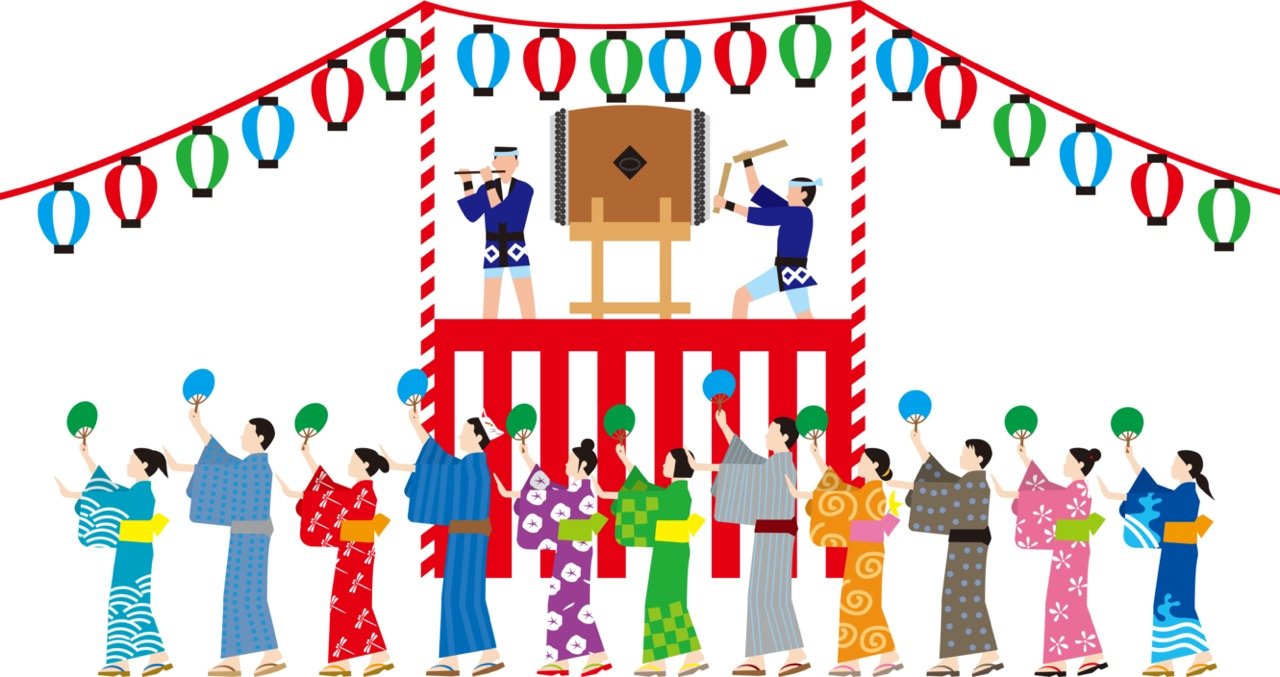
According to this theory, Awa Odori developed from the Bon Odori, a Buddhist dance traditionally held during the Obon period during July (on the old lunar calendar). Forms such as “Niwaka” and “Kumi Odori” are believed to have evolved from it.
Later, as Tokushima prospered through the indigo and salt trades, indigo merchants made the matsuri more extravagant, and it gradually became popular amongst the locals. After the war, Awa Odori developed as a symbol of reconstruction and recovery, and eventually grew into the large-scale matsuri that it is today.
The Three Styles of Dance
★"Otoko Odori" - Male Dance
The “Otoko Odori” style is characterized by powerful, bold movements. Dancers swing their arms widely and lift their legs high, using their whole bodies in energetic performances. An almost squatted, lowered-hip stance is essential. From this crouched position, dancers unfold movements that create impactful expressions. The footwork is quick and rhythmic, and in sync with the tempo of the taiko and fue.
While the skill of the individual is important as well, the sense of unity created by dancing in unison as a group, moving in perfect synchronization, creates a captivating sight.
★"Onna Odori" - Female Dance
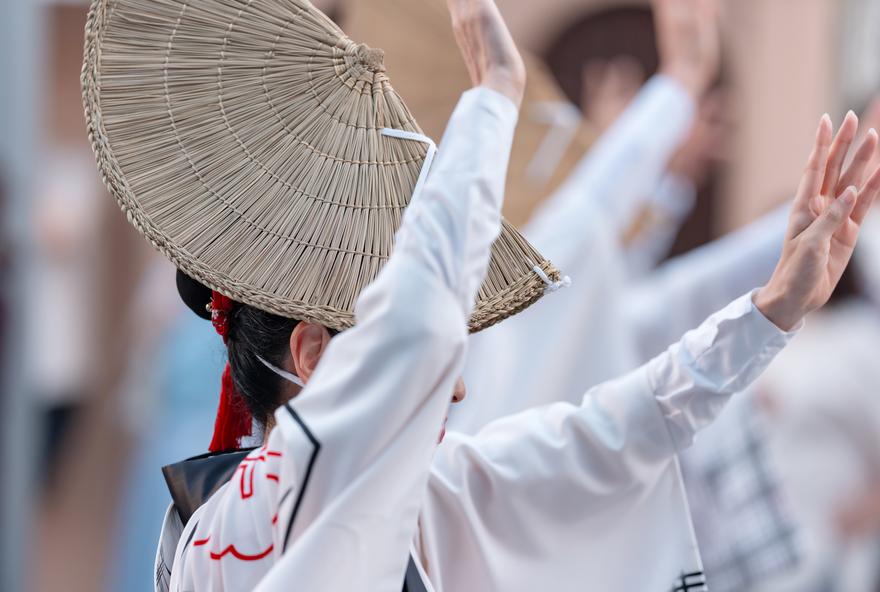
The “Onna Odori” is defined by graceful and elegant movements. Hand motions and footwork are especially refined, and the overall performance emphasizes soft, composed motions. Choreography often highlights elegance and charm through smooth, flowing movements. The costume typically includes an amigasa (woven hat) on the head, a yukata (traditional Japanese clothing) with the hem gathered and tied with a susoyoke (hip cloth), tego (white arm guards) on the hands, and Rikyū-style geta (traditional Japanese sandals) on the feet. The obi (belt) is usually black, completing the classic look of Onna Odori.
★"Onna Otoko Odori" - Female Male Dance
The “Onna-Otoko Odori” is a third style of dance where women perform in the manner of the male dance. It blends masculine strength with feminine grace, creating a routine full of vitality and impact. Movements often include large jumps and quick steps, using the whole body in bold, energetic expressions. Sometimes, the choreography involves close or colliding movements between dancers, adding to the intensity and excitement.
Highlights
- You can see various styles of dancing - Otoko Odori, Onna Odori, and Onna-Otoko Odori - performed to lively ohayashi (music and rhythm).
- At night, the streets fill with many groups, dancing in a parade-like manner.
- There are also groups of children and elders; this is a family-friendly event that you can enjoy with all your loved ones !
More Ways to Enjoy Awa Odori
- If you feel moved to dance along, you can join on the spot by dancing with the Niwaka-Ren (open participation group).
- Rent a yukata or Awa Odori costume and fully experience the spirit of the matsuri.
- Some events also offer dance lessons and workshops where you can experience and practice the dance yourself.
Manners and Tips
- Please refrain from filming or photographing while walking, as it can be dangerous.
- When watching, observe from a safe distance to avoid any clash or getting in the way of the dancers.
- It can get very hot during this time of year in Japan. Please remember to stay hydrated.
In Conclusion
Awa Odori is fun and energizing even Josh to watch - but can be even more so to join! Why not dress up, dance with the crowd, and feel the spirit of Japan’s summer through the matsuri? It could make for a wonderful memory of a one-of-a-kind experience.