Setsubun on February 3: Inviting Good Fortune with Bean Throwing and Ehōmaki

On February 3rd, cheerful voices shouting “Oni wa soto! Fuku wa uchi!” (“Demons out! Good fortune in!”) can be heard all across Japan. This marks Setsubun, a traditional event held on the day before Risshun, the beginning of spring.In the old Japanese calendar, spring signified the start of a new year. In that sense, Setsubun is like New Year’s Eve. The true purpose of the event is to drive away the bad energy that has built up over winter and welcome the new season - and good fortune - in a clean, refreshed state. In this article, we’ll introduce Setsubun’s two main traditions - mamemaki (bean throwing) and ehōmaki - along with lesser-known ways adults enjoy the day and important safety tips.
1. “Oni wa soto!” — Let’s Go All Out with Bean Throwing
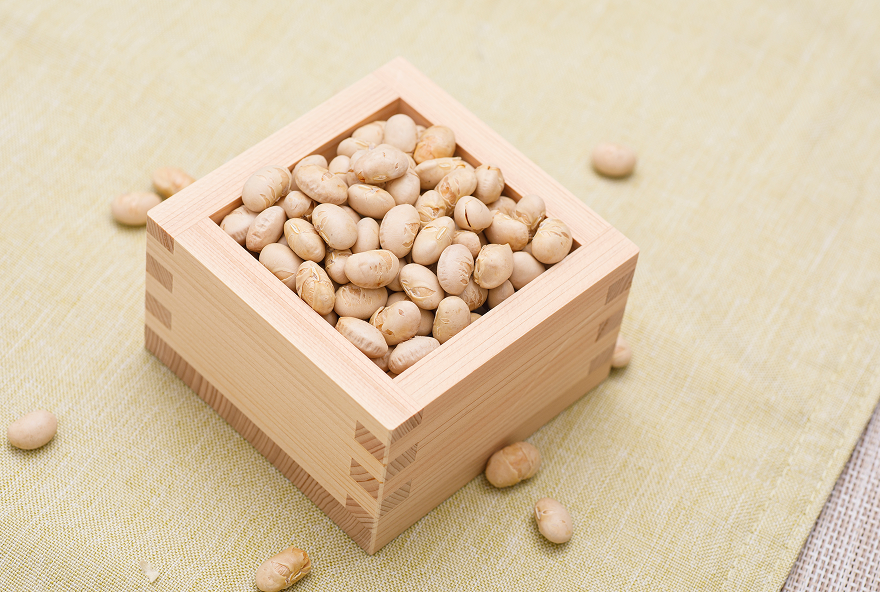
The centerpiece of Setsubun is mamemaki, or bean throwing. The rules are simple, but the tradition has surprising depth. Roasted soybeans are thrown at the “oni” (demons) to drive them out of the house.
[Origin] Why Throw Beans?
-
“Beans destroy demons”
In Japanese, mame (beans) sounds like ma wo metsuru—“to destroy evil.”
- Why Roasted Beans In Particular?
If you use raw beans and forget to pick one up, it might sprout - which is considered bad luck (paralelling the sprouting of the bean to the image of evil "growing" back). Roasted "Fuku-mame" (fortune beans) are used to symbolize "sealing away" the oni's eyes.
【The Rules of Mamemaki】
1. Decide Who Will Play the Role of the Oni
Traditionally, the father wears an oni mask, then playfully chases and growls at the children. Some families now rotate roles.
2. Shout Loudly
Open the windows, throw beans outside while shouting “Oni wa soto!”, then close the windows and throw beans inside saying “Fuku wa uchi!” - keeping bad luck out and good fortune in.
3. Eat the Beans (toshidori-mame)
Afterward, eat the same number of beans as your age (or age plus one). It’s said to bring good health and prevent illness.
Tips
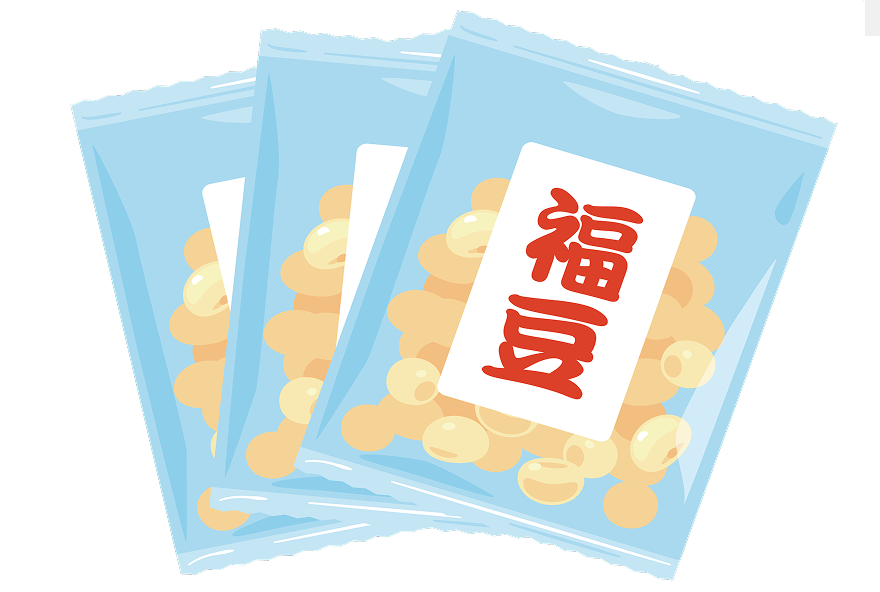
If cleaning up beans sounds like a hassle, or if you don’t like them, some people throw individually wrapped beans or even small chocolates instead!
2. Ehōmaki: The “Magic” Sushi Roll That Grants Wishes
Once the demons have been driven away, it’s time to draw good fortune into yourself.
The ultimate item for this is the extra-thick sushi roll known as ehōmaki.
[Origin] Rolling in the Seven Deities of Luck?
Ehōmaki began as a custom for prosperity among merchants and the entertainment districts of Osaka.
The roll is filled with a colorful variety of ingredients—such as cucumber, shiitake mushrooms, sakura denbu (sweet fish flakes), and omelet. Ideally, seven ingredients are used, each representing one of the Seven Lucky Gods. It is considered an auspicious sushi roll that symbolizes “wrapping up good fortune and eating it.”
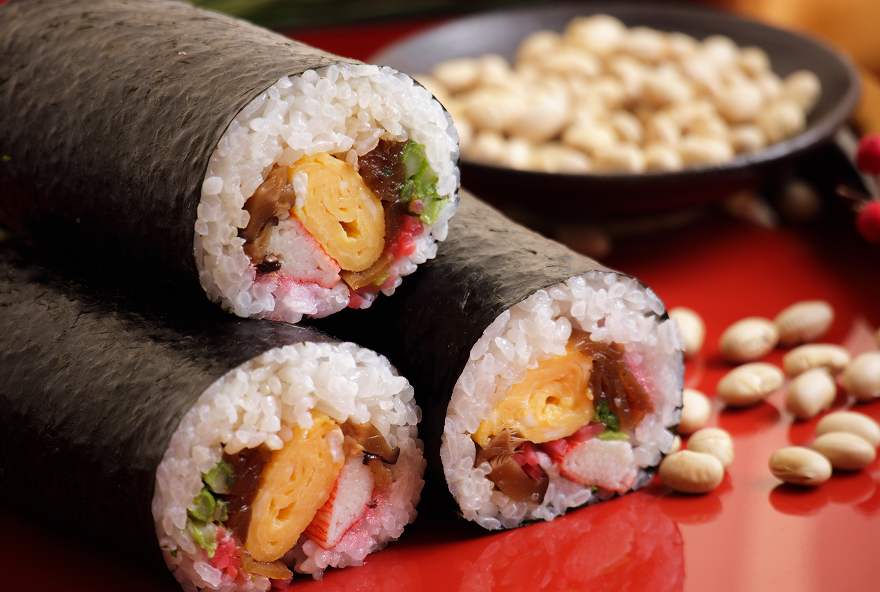
[The Three Rules of Ehōmaki]
It is said that breaking these rules reduces the good luck you receive, though safety always comes first and they do not have to be followed strictly.
1. Eat the Roll Whole, Without Cutting
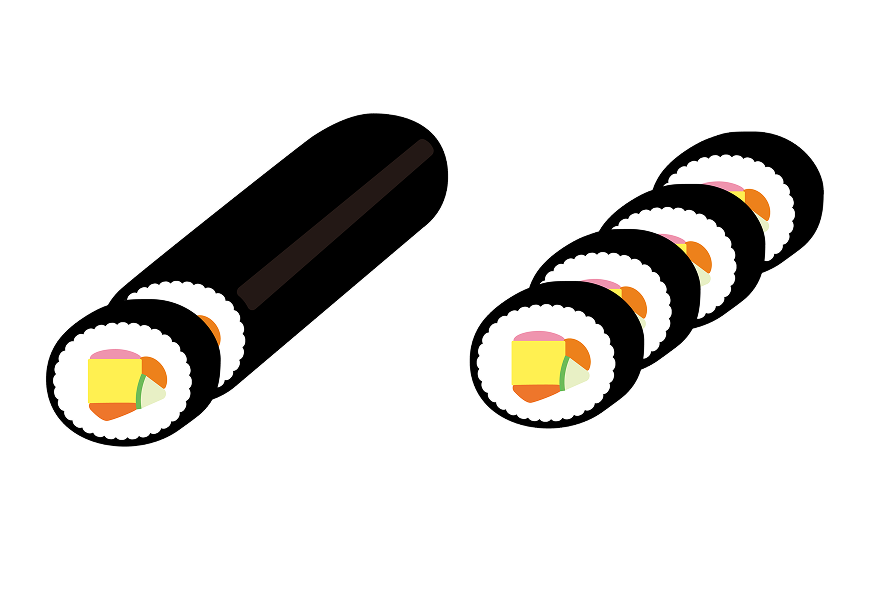
To avoid “cutting your ties and good luck”, the roll is eaten in one piece without using a knife. Be bold and go for the whole thing (if it is safe for you to)!
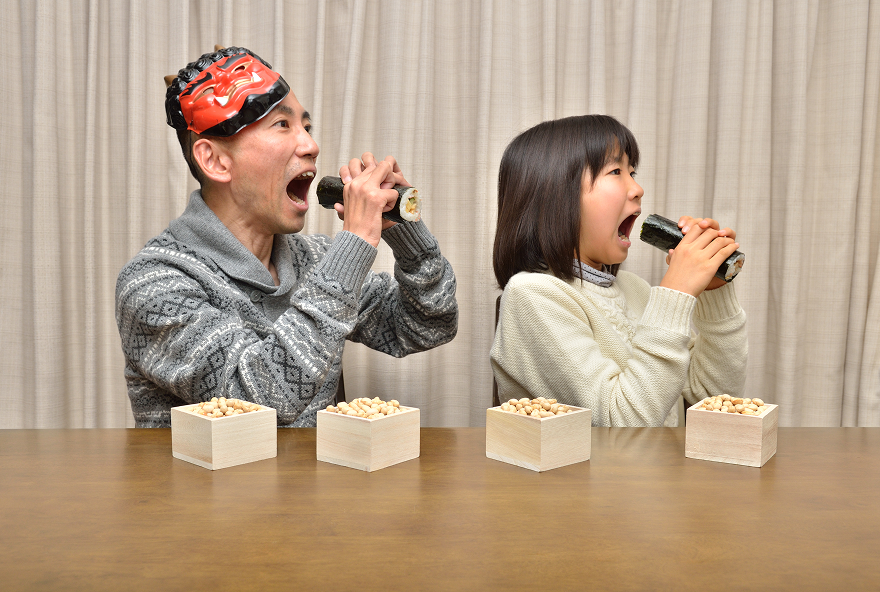
2.Face the "Lucky Direction" of the Year While Eating
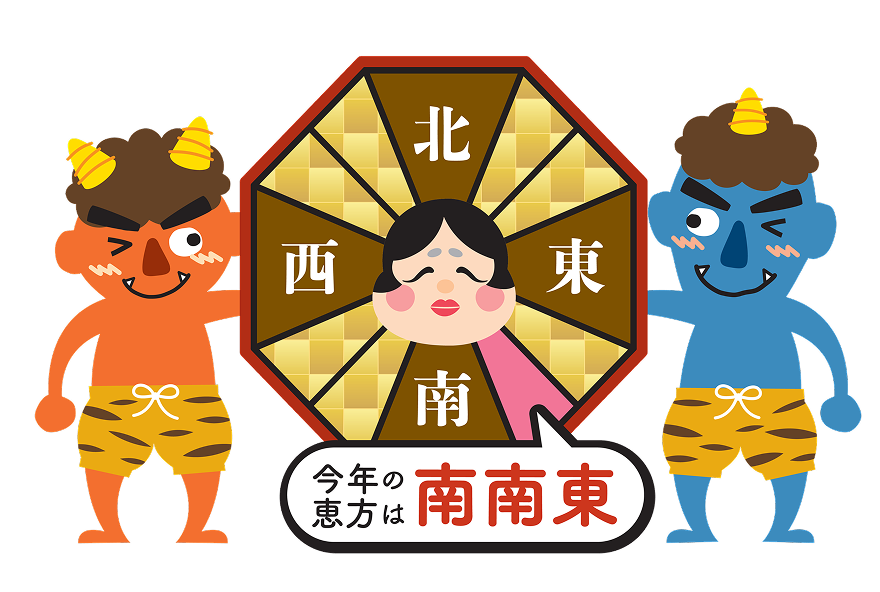
This is the direction where Toshitokujin, the deity who governs that year’s good fortune, is believed to reside.
★ For 2026, the lucky direction is south-southeast (slightly south) - a compass app can help.
3. Don't Speak Until You Finish Eating
Speaking while eating is said to let your luck escape through your mouth. Silently make a wish in your heart and maintain complete silence until the final bite.
3. Important Precautions When Eating [Safety First]
Tradition matters, but your life and safety matter more. Ehōmaki is very thick, and the seaweed can be difficult to bite through, posing a choking hazard.
Please be especially careful and take note of the following. Never push yourself:
- Do not swallow it all at once:
This can easily cause choking. Take small bites and chew thoroughly.
- Have a drink ready:
Keep water or tea nearby to moisten your throat as you eat.

- Children And Seniors Should Cut the Roll:
Protecting life comes before the rule of ‘not cutting your ties.’ For small children and elderly people, don’t hesitate to cut the roll into easy-to-eat pieces. Even if it’s cut, good fortune won’t escape as long as you enjoy the tradition.
4. Another Protective Charm: Hiiragi Iwashi
In addition to bean throwing, there is another traditional charm used to ward off evil - one that is placed at the entrance of the home.
-
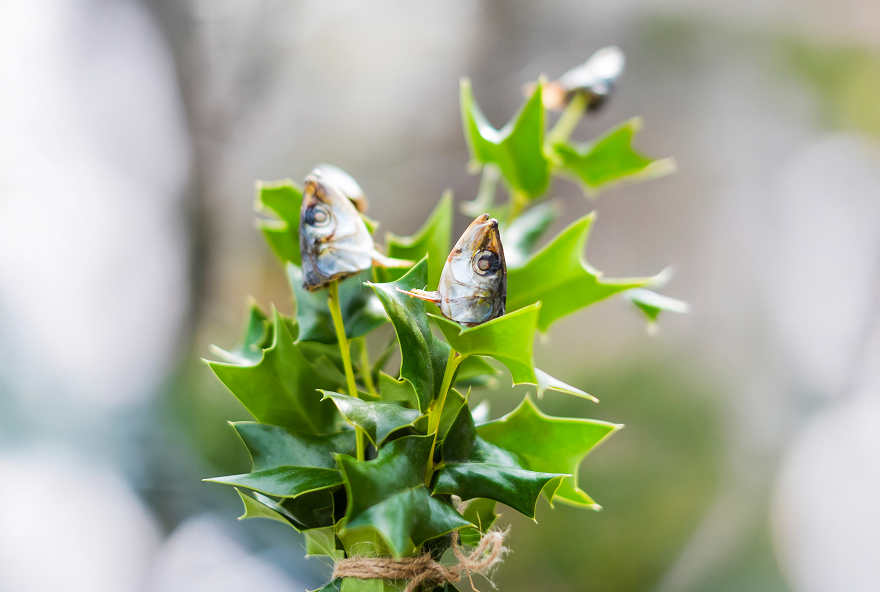
Holly leaves (hiiragi)
Its sharp, spiky leaves are believed to pierce the demons’ eyes.
-
Sardine head (iwashi)
The strong smell of a grilled sardine is said to drive demons away.
These items are sometimes sold together at supermarkets as a “Setsubun set,” so why not display one at your front door and reinforce your home’s defenses?
5. Where to Get These Items
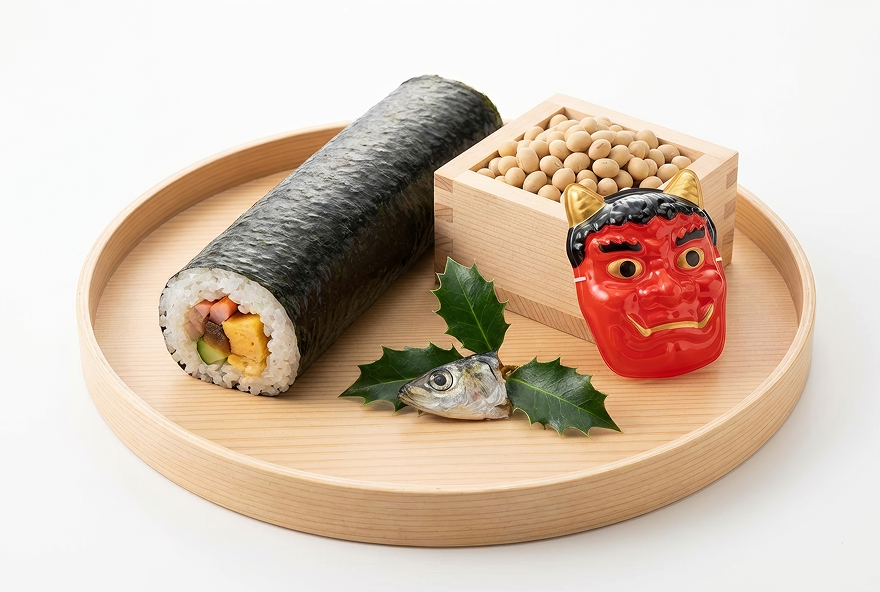
[Purchase location] Supermarkets, convenience stores, and department stores
Reservations usually begin in late January, and on the day itself the shelves are stacked high.
-
Evolutionary Ehomaki (Modern Ehōmaki Variations)
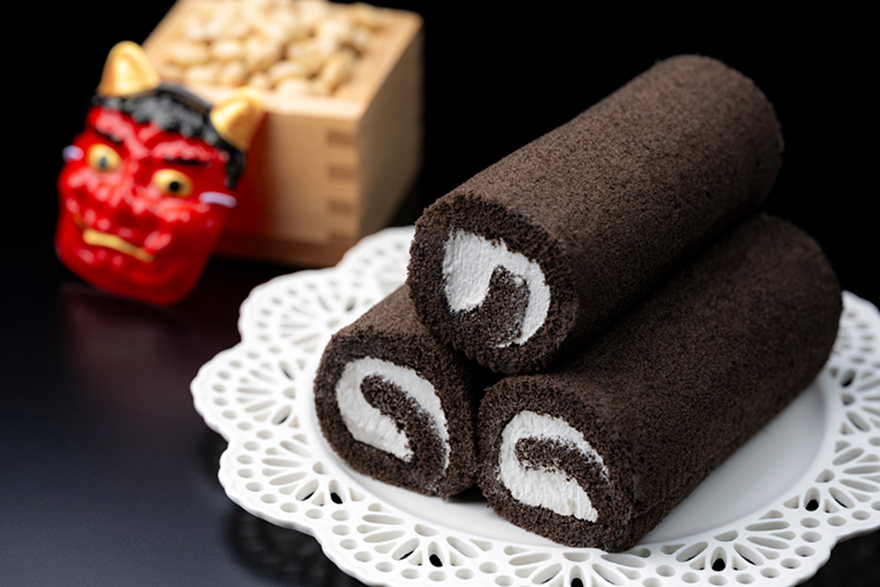
In recent years, a wide range of creative options has become popular - luxury rolls packed with seafood, meat-filled “nikumaki,” character-themed ehōmaki for children, and even dessert versions made with chocolate roll cake.
-
Half Size Options
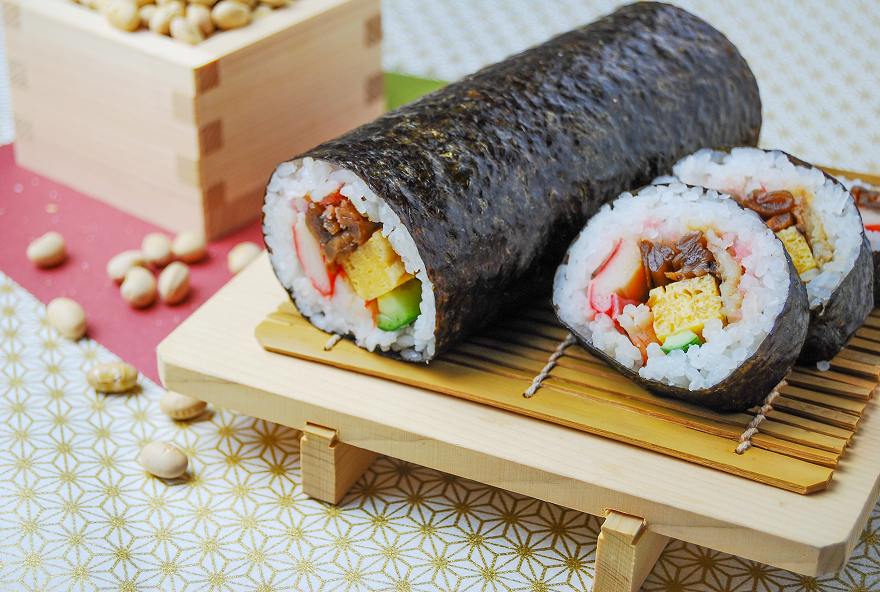
For those who aren’t confident they can finish a full roll, shorter and easier-to-eat sizes are widely available.
6. Join Setsubun Events Across Japan
At famous temples such as those in Tokyo’s Asakusa, Zojoji, and Naritasan Shinshoji, special Setsubun events are held where celebrities and sumo wrestlers energetically throw beans into the crowd. The excitement of people reaching out to grab “good fortune” feels just like being at a live concert! If you’re lucky, you might catch sweets, gifts, or even special prize-winning beans. Similar events are held all over Japan, so searching online to find one near you is highly recommended.
Conclusion
“Throwing beans to defeat demons, then silently devouring a giant sushi roll.”
You may not find a tradition this unique anywhere else in the world.
On the night of February 3, 2026, face south-southeast.
Make a quiet wish on your own - or enjoy lively bean throwing with your family.
Just be sure to prioritize safety, and celebrate the arrival of spring in a delicious and joyful way!