March 3rd: Hinamatsuri, A Festival for Girls - Beautiful Dolls from the Heian Era and Traditional Spring Dishes

As March begins, spring in Japan is just around the corner.
March 3rd is a special day called Hinamatsuri (Doll Festival) or Momo no Sekku (Peach Festival). It is an event that celebrates and prays for the healthy growth and happiness of girls. In homes across Japan, beautiful dolls are displayed and special dishes are prepared to mark the occasion. This article will introduce the meaning behind this beautiful tradition that has continued for over 1,000 years, as well as ways that even visitors to Japan can enjoy it.
1.What Are Hina Ningyō (Hina Dolls)?
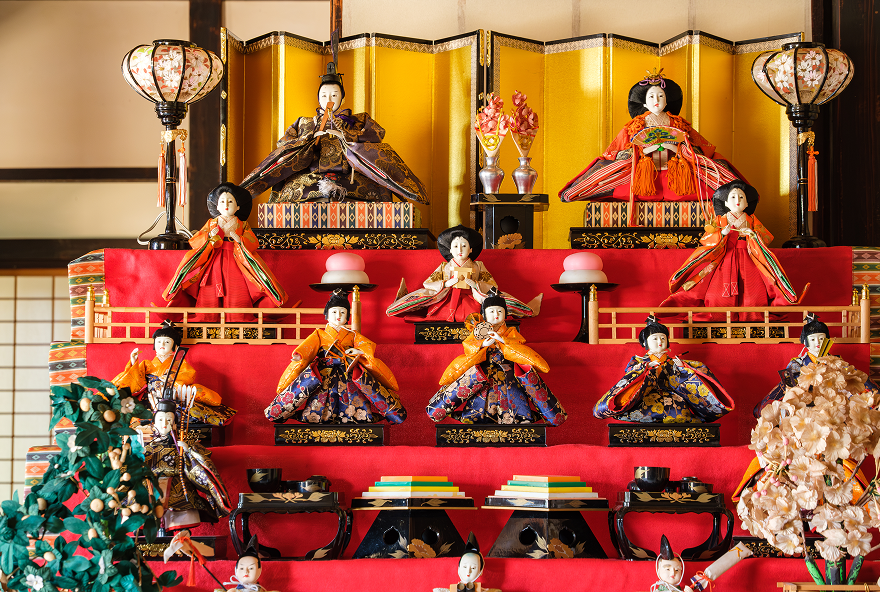
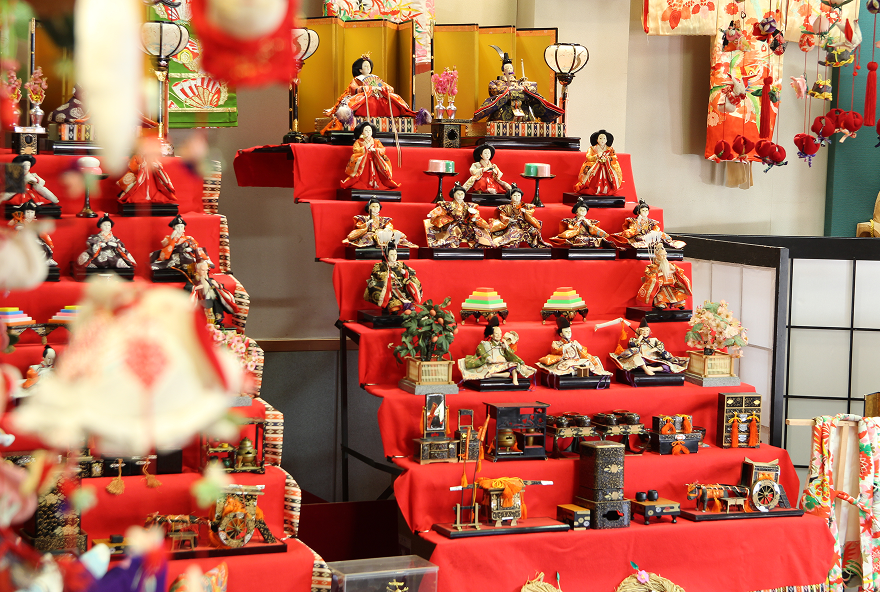
Hinamatsuri (Doll Festival) originates from court culture during the Heian Jidai (Heian Period). Have you ever seen Japanese dolls displayed on a red, staircase-like platform in hotel lobbies or department stores around this time of year? These are called Hina Ningyō (Hina Dolls).
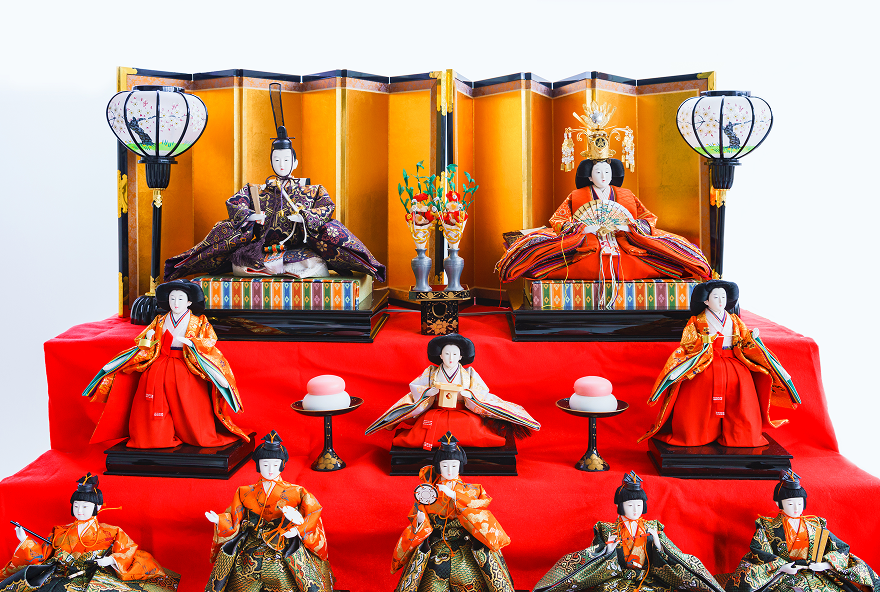
The two figures at the top tier are called Odairi-sama (Imperial Prince / Emperor figure) and Ohina-sama (Imperial Princess / Empress figure). They represent the wedding ceremony of the Emperor and Empress from Japan’s ancient Heian Period. The kimono they wear is called Jūnihitoe (Twelve-Layered Court Robe), an extremely formal and elegant style of court dress worn by noblewomen of that era.
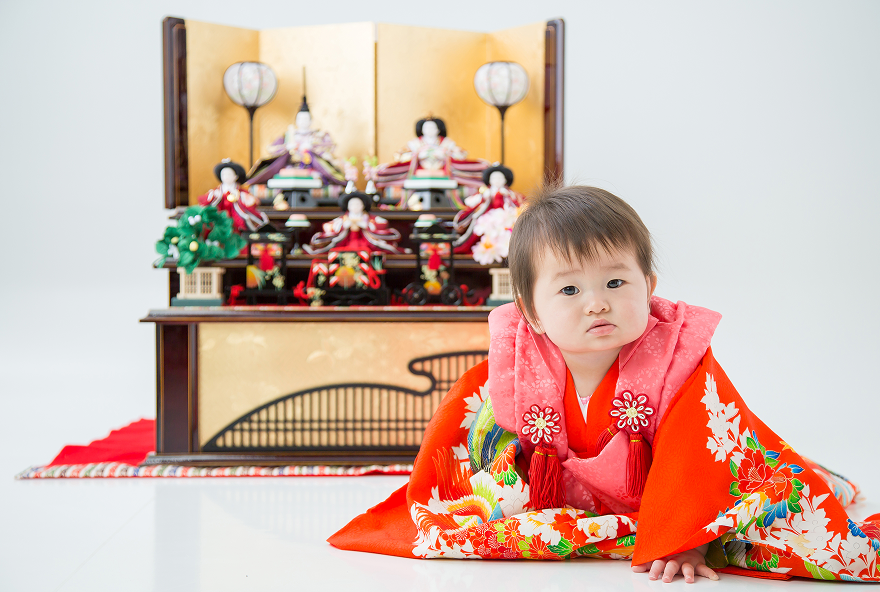
Hina Ningyō (Hina Dolls) are very delicate and expensive works of craftsmanship. In many families, grandparents give them as a gift when a baby girl is born. Every March, they are carefully taken out of their boxes and displayed. They are sometimes passed down from mother to daughter, and then to granddaughter, becoming part of the family’s history itself.
Right or Left? Differences in Arrangement
Did you know that the arrangement of the dolls differs between Kantō (Eastern Japan region including Tokyo) and Kansai (Western Japan region including Kyoto and Osaka)?
Kanto Style
Facing the display: Odairi-sama (Emperor figure) is placed on the left. Ohina-sama (Empress figure) is placed on the right.
Kansai Style
Facing the display: Odairi-sama (Emperor figure) is placed on the right. Ohina-sama (Empress figure) is placed on the left.
This difference is said to reflect cultural influences:
The modern Kantō style incorporates Western international etiquette, while the Kansai style preserves traditional Japanese customs.
2. The Origin of the Festival: Nagashi-bina (Floating Dolls Ritual)
Hinamatsuri (Doll Festival) was not originally just a celebration for displaying dolls. Its origin lies in a purification ritual called Nagashi-bina (Floating Dolls Ritual). In this ceremony, people would transfer their illnesses and misfortunes onto paper dolls and then set them afloat on a river to cleanse themselves. In ancient times, dolls were used as symbolic substitutes for humans. People believed that by sending the dolls away, they could protect children from evil spirits and bad luck.Even today, this mystical ritual can still be seen in certain areas, such as Shimogamo Jinja (Shimogamo Shrine) in Kyoto and parts of Tottori-ken (Tottori Prefecture).
3. Ceremonial Foods That Bring Good Fortune
During Hinamatsuri, colorful, spring-inspired dishes are served.
Each one carries a special meaning.
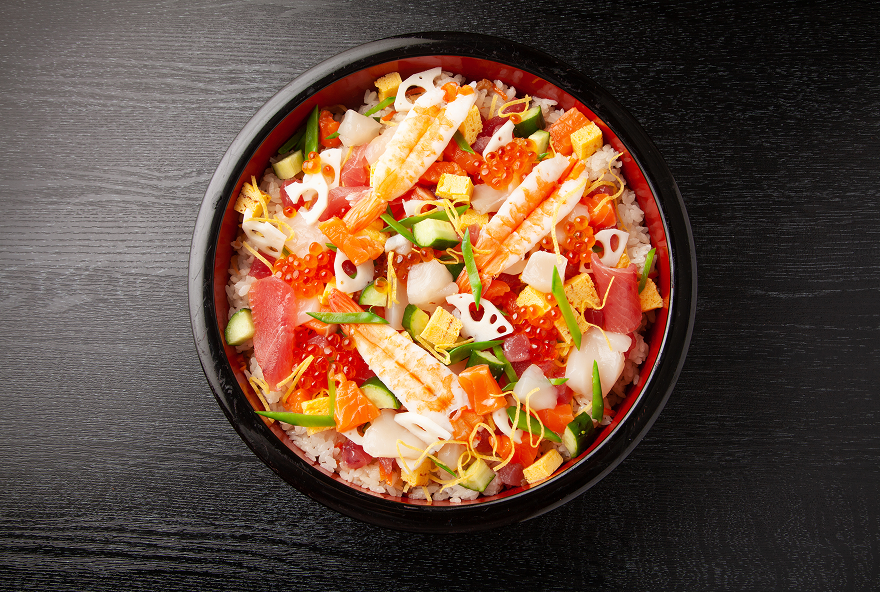
Chirashizushi (Scattered Sushi)
Chirashizushi (Scattered Sushi) is sushi rice topped with ingredients such as shrimp, lotus root, and shredded egg (kinshi tamago). It represents the wish that “the child will never have trouble finding food in the future,” symbolizing prosperity and abundance. Its vibrant appearance is so decorative that it almost looks like a cake.
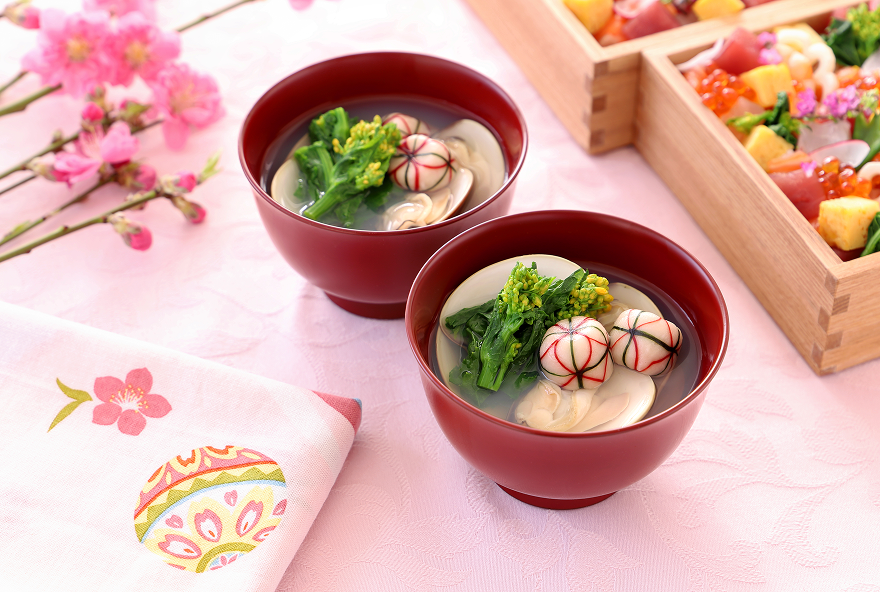
Hamaguri no Osuimono (Clear Clam Soup)
Hamaguri no Osuimono (Clear Clam Soup) is made using hamaguri (clams). Clam shells naturally fit perfectly only with their original matching half and cannot align properly with any other shell. Because of this, the dish symbolizes the wish that “one day, she will meet a wonderful and perfectly compatible partner.” It represents hopes for a happy and harmonious marriage.
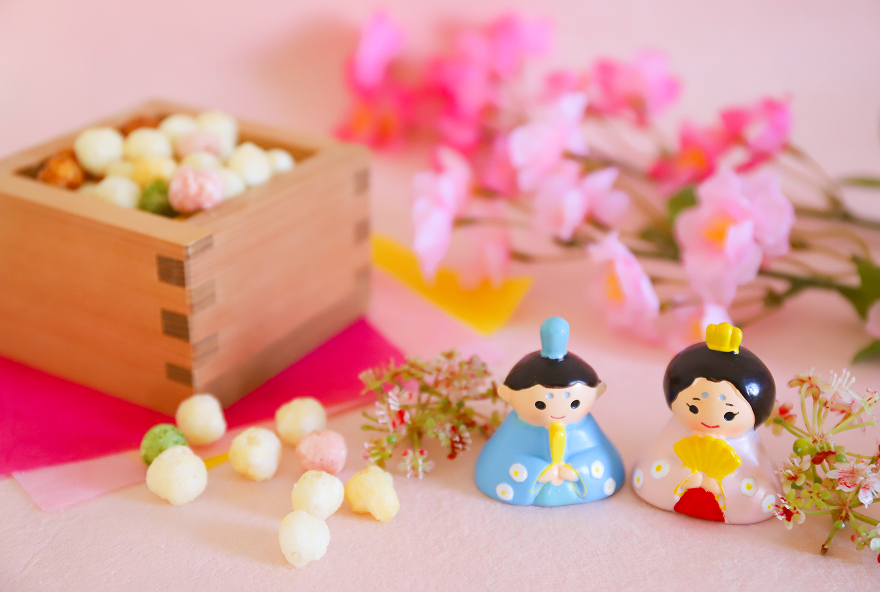
Hina Arare (Colorful Rice Crackers for the Doll Festival)
Hina Arare (Festival Rice Crackers) are colorful rice snacks in pink, green, white, and yellow. These colors represent the four seasons, and the snack carries the hope that “she may be happy throughout the entire year.”
4. Where You Can Experience Hinamatsuri
Even if you do not have friends from Japanese families, with whom to celebrate this tradition, there are still many ways to enjoy Hinamatsuri.
Hotel Lobbies and Museums
During this season, famous hotels such as Meguro Gajoen (a historic luxury hotel in Tokyo) and Keio Plaza Hotel (major hotel in Shinjuku, Tokyo) hold special events displaying elaborate Hina Ningyō in their lobbies. In many cases, these displays are open to the public and can be viewed free of charge.
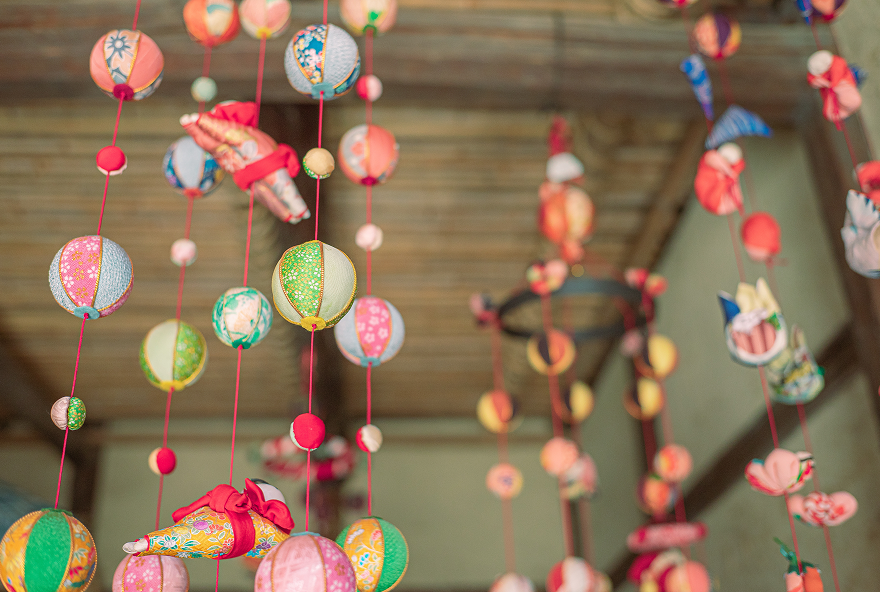
Tsurushi-Bina (Hanging Hina Doll Decorations)
In places such as Inatori in Izu (coastal town in Shizuoka Prefecture) and Yanagawa in Kyushu (city in Fukuoka Prefecture), there is a custom called Tsurushi-bina (Hanging Doll Decorations). This tradition involves suspending numerous small handmade fabric dolls from the ceiling. The sight of an entire room filled with colorful hanging ornaments is breathtaking, and incredibly photogenic.
Conclusion
Hinamatsuri is a heartwarming event that highlights Japan’s delicate doll craftsmanship and deep, loving sentiment within families. On March 3rd, why not celebrate the arrival of Japanese spring by picking up some Chirashizushi or Hina Arare at your local supermarket? It’s a simple but beautiful way to welcome the season!